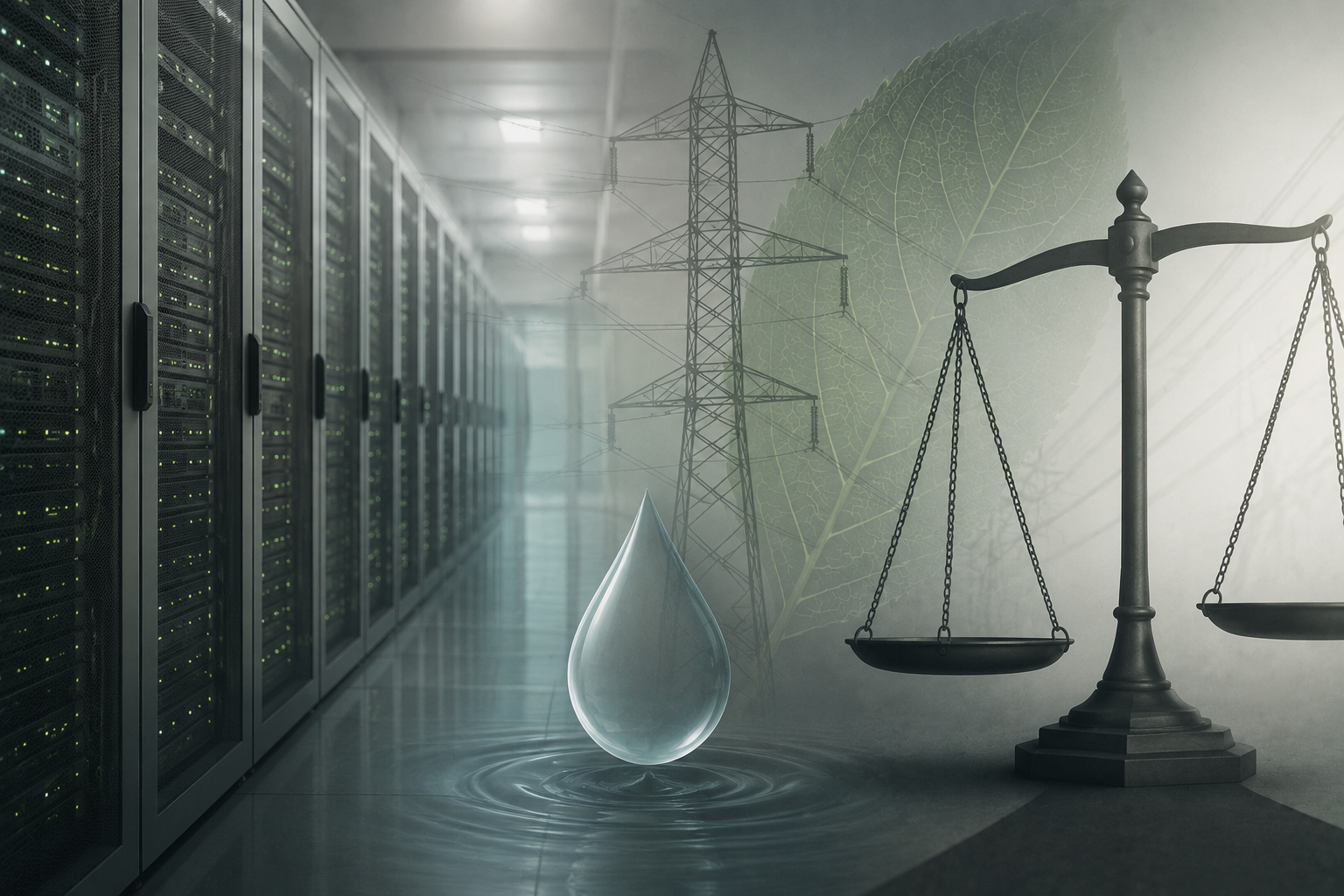
The infrastructure behind artificial intelligence is becoming a more visible target in climate-related litigation, as communities, campaigners and regulators challenge the energy, water and pollution impacts of datacentres.
A new report covered by the Guardian and linked to the London School of Economics' climate-law work says datacentres are appearing in legal disputes across several jurisdictions, including cases connected to water stress, fossil-fuel power supply and local planning decisions. The wider dataset examined thousands of climate-related cases since 2015.
The trend reflects a shift in how the AI boom is being contested. Until recently, public debate focused heavily on model safety, copyright, labour and misinformation. The physical systems behind AI -datacentres, power lines, backup generators, water cooling and gas infrastructure - are now becoming legal and political flashpoints.
The emerging cases do not all make the same argument. Some challenge water use in places already facing drought or supply pressure. Others question approvals for fossil-fuel infrastructure built to serve energy-hungry computing facilities. In some disputes, residents and campaigners seek more transparency from local authorities and companies about environmental impacts before projects proceed.
This is not yet a settled body of law. A lawsuit can delay a project, force disclosure or change planning conditions without ultimately stopping construction. Companies also argue that datacentres can be powered by renewables, improve grid investment and support services used across the economy. But even unsuccessful litigation can raise costs, slow approvals and put pressure on companies to publish clearer environmental data.
The timing matters because AI demand is accelerating. Training and running large models can require large amounts of electricity and cooling. As governments court investment from cloud and AI companies, local communities are asking who pays for the grid upgrades, water pressure and emissions that may come with new facilities.


Reader comments
Subscribers can join the conversationSign in to join the conversation. Comments are open to everyone with a free account.
Sign in or create accountLoading comments…