
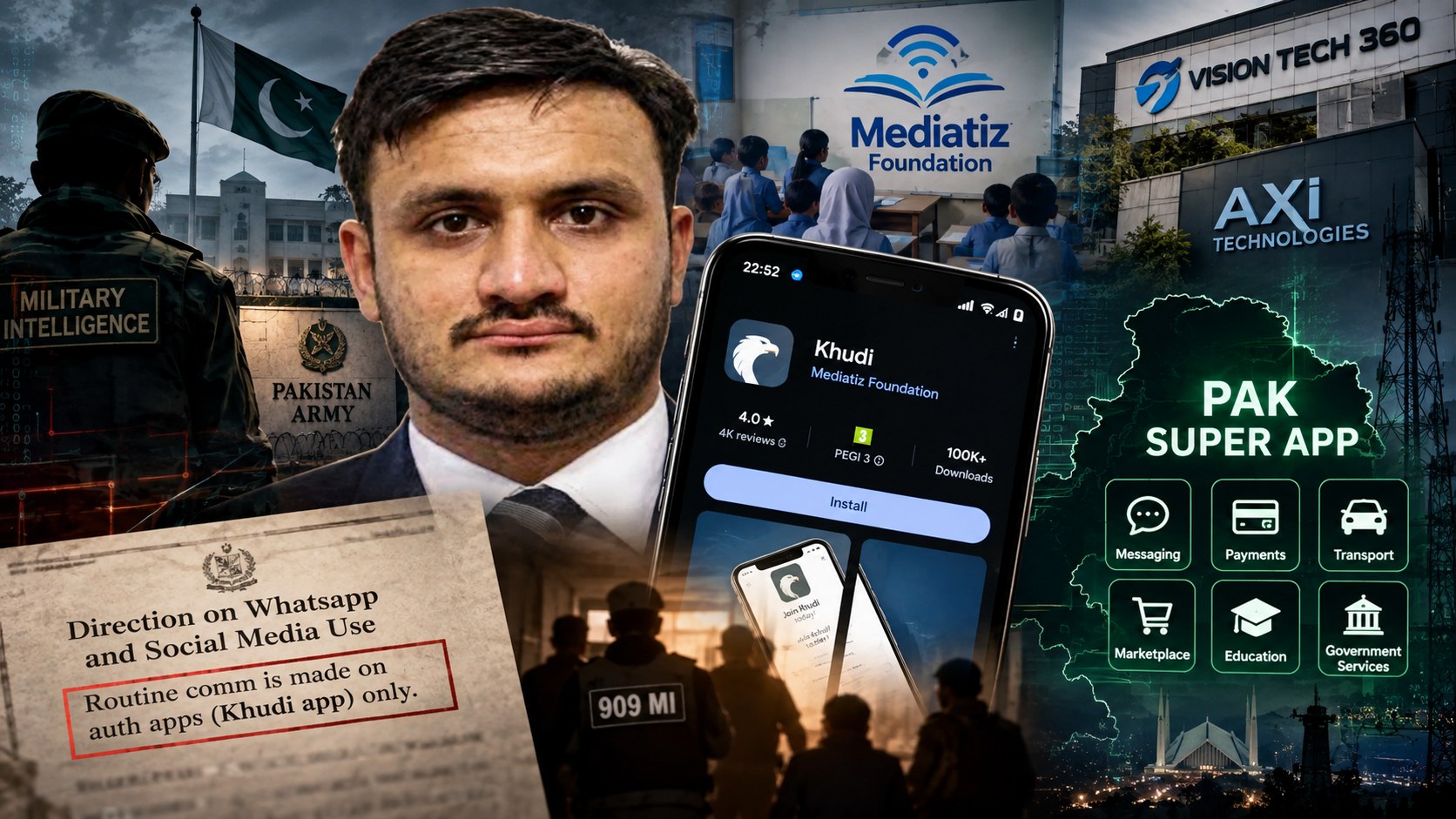
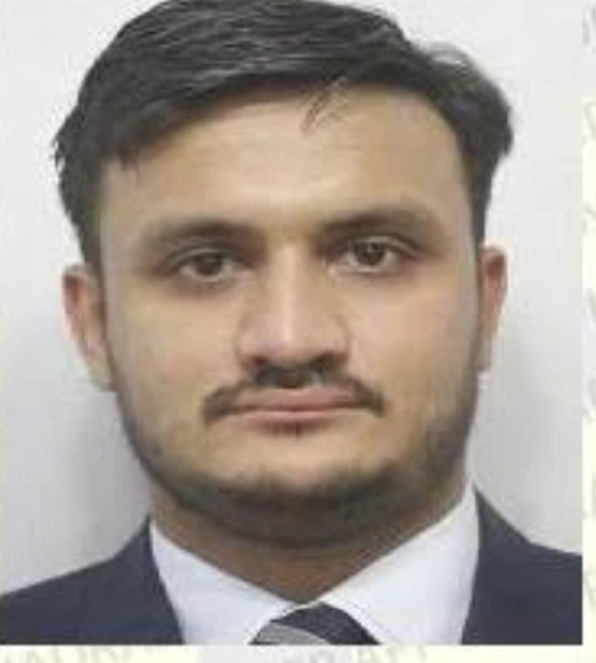
The author says he knows Rasheed personally and is familiar with his projects. Public records identify Muhammad Rehan Rasheed as founder and chief executive of Mediatiz Foundation.
Pakistan's argument for reducing its dependence on foreign technology is not difficult to understand. Militaries have obvious reasons to distrust commercial messaging platforms for official communications; governments have legitimate reasons to encourage domestic software; and a country of more than 240mn people has ample room for local digital services. The harder questions begin when national security, children's education, commercial technology and state power appear to converge.
Over recent weeks I have received information from sources serving within Pakistan Army's Military Intelligence who allege that a much wider digital programme is being developed: secure messaging, payments, transport, online marketplaces and education products that could ultimately be brought together under what the sources describe as a 'Pak Super App'. They further allege that parts of this work are connected to the Directorate of Military Intelligence and 425 MI through private or non-profit entities.
Those are serious claims. They should not be presented as established merely because intelligence sources make them. My reporting therefore separates three categories: what I know first-hand; what can be checked in public records; and what my sources allege but which still requires independent documentary or technical corroboration.
The public face: Khudi and Mediatiz
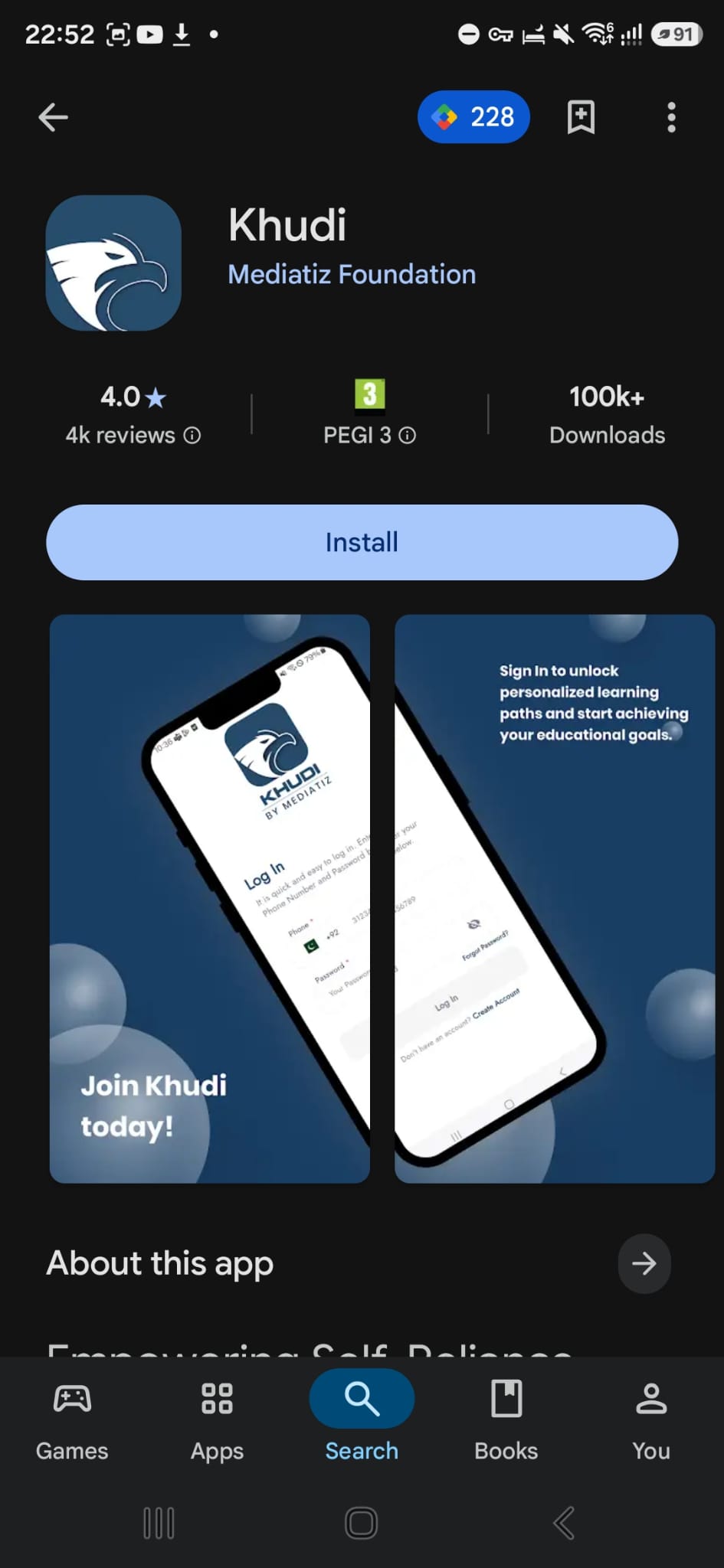
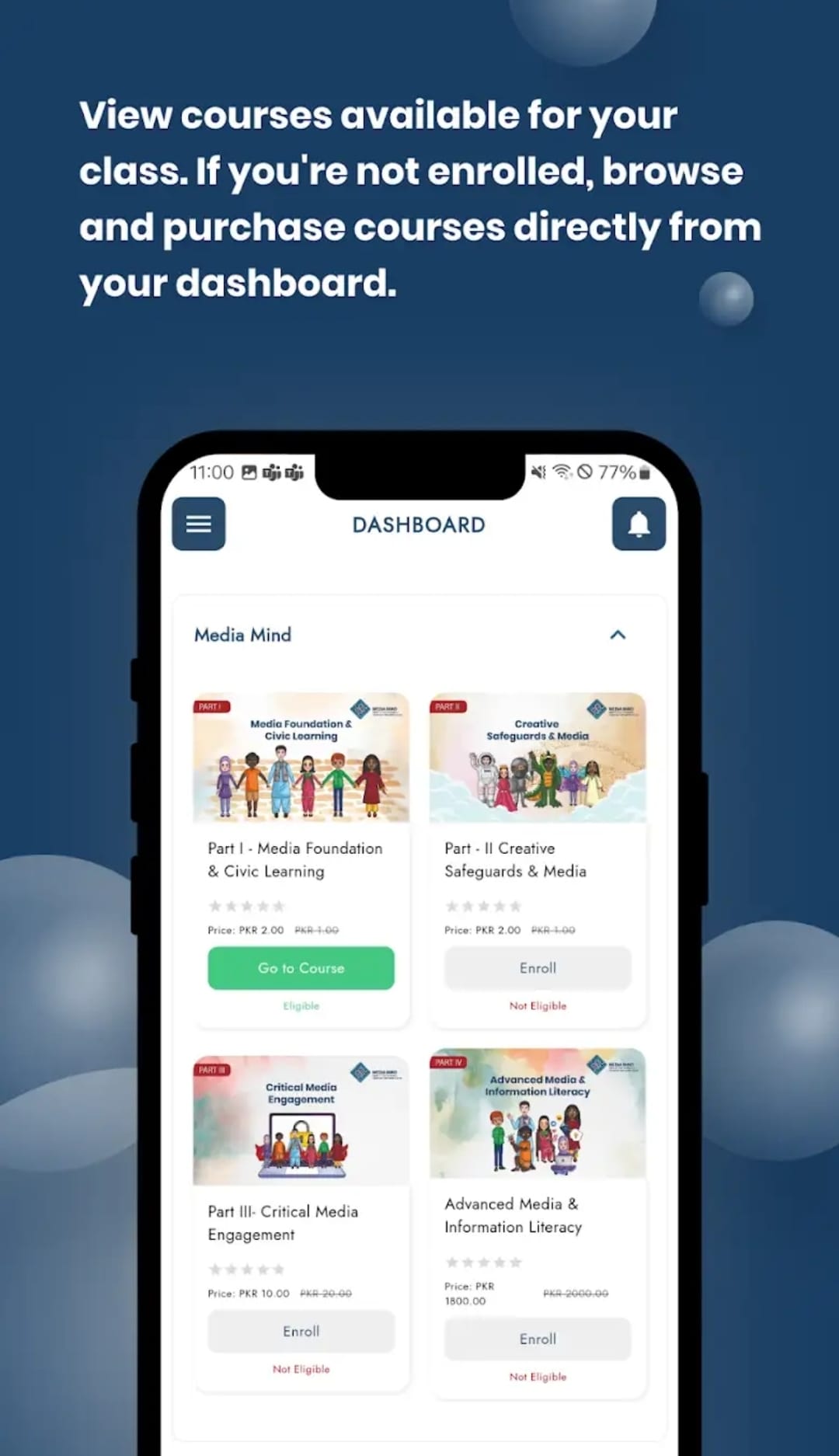
The most visible part of the story is Khudi, an education application published by Mediatiz Foundation. Google Play currently shows more than 100,000 downloads and identifies Muhammad Rehan Rasheed in the developer information. The app describes itself as an educational platform through which students can register, manage profiles and access courses. Its current release notes also refer to school administration, student management, payments and WhatsApp support.
Mediatiz describes Khudi as an integrated learning management system connecting students, teachers and focal persons. Its public material documents work inside government education networks. The foundation says it trained 514 teachers from Federal Government Educational Institutions in December 2024, following a pilot in 25 FGEI schools in the Wah region. It also says it has run programmes through the Federal Directorate of Education and across Balochistan.
This footprint matters because it establishes that Mediatiz is not a hypothetical entity and Khudi is not an obscure prototype. They have an identifiable institutional presence in Pakistan's education system. It does not, by itself, establish an intelligence relationship.
A personal connection, and a necessary distinction
I know Major Rehan Rasheed personally and I am familiar with his projects. That first-hand acquaintance is relevant to why I took the information seriously when his name repeatedly surfaced in conversations with serving sources. It is not, however, proof of every allegation those sources make.
Public sources describe Muhammad Rehan Rasheed as founder and chief executive of Mediatiz Foundation. A 2025 academic paper also identifies him in that role. Mediatiz's current leadership page uses the name Dr Rehan Tanoli. I know from my own personal acquaintance that Major Rehan Rasheed and Dr Rehan Tanoli are the same person. That is a statement of my first-hand knowledge; it should not be confused with the separate source allegations about his official role, reporting relationships or the wider programme. Mediatiz says its founder and chief executive has more than 15 years of strategic-communication experience, primarily within the Government of Pakistan.
The data question
Khudi's public-facing functions create an obvious privacy question even without accepting any intelligence allegation. The application allows educational profiles containing school and grade information; screenshots supplied to me show fields for a student's full name, date of birth, gender, school type and institution. Mediatiz's own website describes dashboards for students, teachers and administrators, course tracking and integrated mobile access.
My sources allege that the educational programme is also intended to create a large databank and that it carries surveillance potential. I have not independently established that claim. The appropriate test is technical, not rhetorical: who controls the servers, what information is transmitted, what is retained, who can access it, how parental consent is obtained, and whether an independent security and privacy audit has been conducted for data concerning minors.
An internal-looking directive raises a different Khudi question
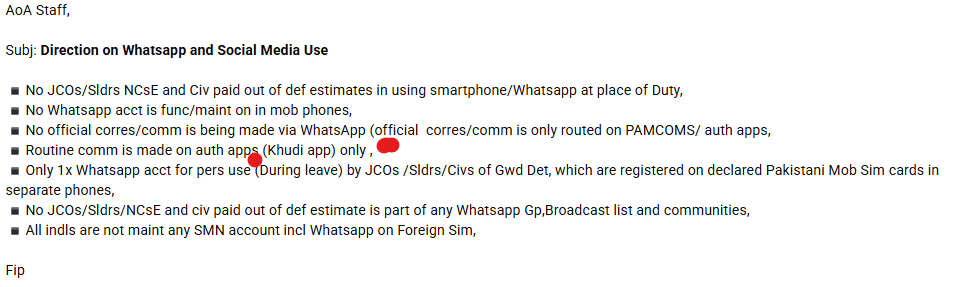
A document supplied to me, presented as an internal direction on WhatsApp and social-media use, adds a separate strand. It tells personnel not to conduct official correspondence through WhatsApp, restricts participation in WhatsApp groups and foreign-SIM accounts, and contains the line: 'Routine comm is made on auth apps (Khudi app) only.'
I have not independently authenticated the issuing authority of this document. If genuine, however, it creates a question that deserves a direct answer: is the 'Khudi app' referred to in military communications the same product as the public educational application, a separate secure communications product sharing the name, or an unrelated system? The public Google Play version is presented primarily as an education platform, not as a WhatsApp replacement.
Vision Tech 360 and AXI Technologies
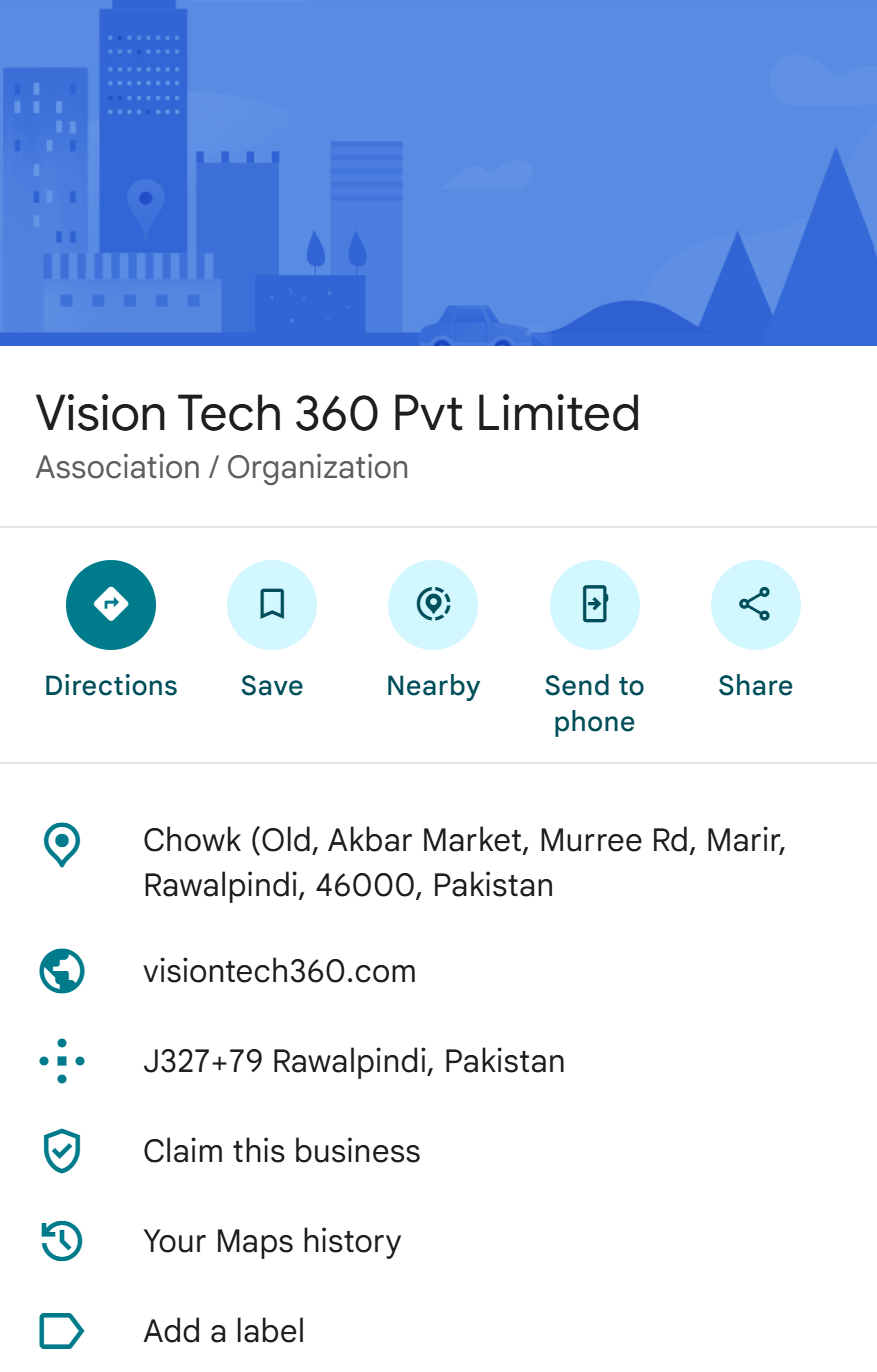
The sources describe a broader technology network. They allege that 425 MI has been tasked with developing or supervising indigenous applications covering messaging, ride-hailing, online marketplaces and payments, and that Vision Tech 360 and AXI Technologies form part of this architecture.
Vision Tech 360 is a real Pakistani technology company. More significantly, a June 2025 list of licensed VPN service providers records Vision Tech 360 (Private) Limited as the holder of a Data CVAS licence for Kryptonyme VPN. That public record lists Aamir Hayat Khan Niazi as chief executive and gives an address on Ammar Shaheed Road, Chaklala Scheme 3, Rawalpindi. This conflicts with the source claim that Brigadier Asim is the chief executive or operational head. The discrepancy should be resolved through corporate and beneficial-ownership records rather than assumption.
My sources further allege that AXI Technologies is connected to the same network, that Brigadier Asim exercises leadership across AXI and Vision Tech, that DMI coordination is overseen under Brigadier Jan Alam Khattak, that Brigadier Haris, Director Military Intelligence-DMI (Plans), directly monitors AXI, and that the chain reports to 425. They also name a colonel in an HR role. I have not independently verified those command relationships and do not publish a private telephone number supplied for that individual.
The alleged chain is therefore just that: an allegation. The existence of the companies and some of their activities is public; military control and funding require harder evidence.
The alleged end-state: a Pakistani "super app"
The sources' central claim is strategic rather than corporate. They say the intention is to build separate domestic services first and combine them later into a Pakistani super app: communications, payments, transport, commerce, education and potentially government services within a single ecosystem.
There is nothing inherently improper about a super app. Nor is there anything unusual about a state seeking secure domestic communications. The governance issue arises if an intelligence organisation secretly controls commercial entities, if government institutions compel adoption without transparent procurement, or if regulators disadvantage competing services in order to accelerate migration to state-linked products.
My sources allege precisely that latter scenario. They say Pakistan's expanding filtering and firewall capacity could eventually be used to block, throttle or degrade foreign applications and VPN services, leaving users with progressively fewer practical alternatives. Pakistan has had extensive public controversy over internet filtering and VPN restrictions, but I have not independently established a technical link between that infrastructure and Khudi, AXI, Vision Tech or the alleged super-app programme. Such a link would require reproducible network measurements, procurement records, regulatory instructions or other technical evidence.
A fresh and sensitive allegation
The most recent information from my sources is also the most sensitive. They allege that Major Rehan Rasheed - whom I know personally to be the same person who uses the name Dr Rehan Tanoli - has been arrested by 909 MI and moved to an undisclosed location. Sources link the alleged detention to financial and data matters. They further allege that members of his staff have been detained or relocated and that records or data are being removed or destroyed before a new director-general can obtain the full picture. I have not independently established the alleged arrest, the involvement of 909 MI, the location of Rasheed, or the claims concerning destruction of records. I tried to contact him directly, but his phones have remained switched off for several days.
If there is an official inquiry, the appropriate response is preservation: financial records, server logs, contracts, source-code repositories, data-access logs, procurement files and government correspondence should be secured. Allegations of evidence destruction are too serious to repeat casually and too serious, if substantiated, to ignore.
The questions that need answering
This story does not require a predetermined conclusion. It requires disclosure. The Pakistan Army and DMI should state whether 425 MI or any military-intelligence directorate has a financial, operational or supervisory relationship with Mediatiz Foundation, Khudi, Vision Tech 360 or AXI Technologies. The companies should disclose their beneficial ownership, government contracts and any military or intelligence relationships.
Mediatiz should explain the architecture governing children's data: where it is stored, who is the data controller, which third parties have access, how long records are retained and what consent and deletion mechanisms apply. Education departments should publish contracts, budgets, circulars and procurement decisions connected with the platform.
PTA should state whether network-management measures are being used, or contemplated, to favour any domestic application over foreign competitors. And the military should clarify whether the Khudi named in the purported WhatsApp directive is related to the public educational platform.
Pakistan has every right to build its own technology. Its armed forces have legitimate security reasons to develop protected communications. But domestic technology becomes a matter of public accountability when state money, schoolchildren's information, regulatory power and intelligence institutions intersect. The decisive questions are therefore not whether Pakistan should have its own apps, but who owns them, who pays for them, who controls the data and whether citizens retain a genuine choice.
Right of reply
Parrhesia News sent the principal allegations and ten sets of detailed questions to addresses publicly associated with ISPR. Those ISPR messages were returned as undeliverable. The questions were then sent successfully to the Ministry of Defence through its official government email channel, with a request that they be forwarded to the appropriate Pakistan Army/ISPR authority. The Ministry of Defence's official website identifies ISPR and the Pakistan Army among its departments and states that the ministry administers Pakistan's armed forces. As of this update on 26 September 2026, Parrhesia News had received no response from either ISPR or the Ministry of Defence. The absence of a response is not treated as confirmation of the allegations.
Author's note: The military-control, surveillance, political-purpose, forced-installation, firewall, alleged 909 MI arrest and evidence-destruction claims in this article are attributed to sources and are not presented as independently established facts. I separately state as first-hand knowledge that Major Rehan Rasheed and Dr Rehan Tanoli are the same person and that I know him personally. Before publication, Parrhesia News sought detailed comment from Pakistan Army's Inter-Services Public Relations (ISPR) and Pakistan's Ministry of Defence. The ISPR email addresses used were returned as undeliverable. The same detailed request was successfully delivered to the Ministry of Defence, with a request that it be forwarded to the appropriate Pakistan Army/ISPR authorities. As of this update on 26 September 2026, no response had been received from ISPR or the Ministry of Defence. Any subsequent substantive response should be reflected in an update.

Reader comments
Subscribers can join the conversationSign in to join the conversation. Comments are open to everyone with a free account.
Sign in or create accountLoading comments…