Nearly three quarters of a century after Britain detonated its first atomic weapon, British nuclear test veterans are still asking what happened to them, what was recorded about their exposure, and what responsibility the state bears for illnesses that veterans and their families have reported ever since.
I spoke to Alan Owen, co-founder of LABRATS International - Legacy of the Atomic Bomb, Recognition for Atomic Test Survivors - shortly after its annual gathering at Sand Bay, Weston-super-Mare.
Owen told me around a hundred veterans and family members had been at the reunion. But the number able to attend is falling. More than 22,000 UK service personnel, as well as scientists and civilians, took part in the country's nuclear testing programme. The Ministry of Defence has said it does not hold a definitive figure for how many are still alive. Owen estimates that only about 1,200 veterans remain, with an average age approaching 90.
For the surviving veterans, the argument has moved far beyond medals and remembrance. It now turns on medical records, radiation exposure, contested scientific evidence, compensation and a campaign demand for a special tribunal independent of the Ministry of Defence.
And time is becoming an unavoidable part of the story.
From HMS Plym to the hydrogen bomb
Britain entered the nuclear-weapons club on 3 October 1952, when it detonated an atomic device during Operation Hurricane in the Monte Bello Islands off Western Australia.
The bomb had been placed inside the hull of the frigate HMS Plym. The ship was destroyed in the explosion. It was only the beginning.
Between 1952 and 1963, Britain carried out nuclear-weapons testing at the Monte Bello Islands, Emu Field and Maralinga with the agreement and support of the Australian government. Australian radiation authorities record 12 major atomic detonations in Australia: three at Monte Bello, two at Emu Field and seven at Maralinga.
There were also numerous so-called minor trials. These did not produce nuclear detonations, but they involved radioactive materials and conventional explosives. At Maralinga, Australian authorities say those minor trials - including the burning and explosive dispersal of radioactive material - were the principal cause of the site's long-term contamination. Plutonium presented the most significant long-term risk, and precautionary restrictions still apply in some former test areas.
That distinction matters. To hear the word 'minor' today risks giving completely the wrong impression.
As Owen put it during our conversation, some experiments were essentially attempts to discover what radioactive weapon components would do in accidents: burning them, blowing them apart and then measuring what happened.
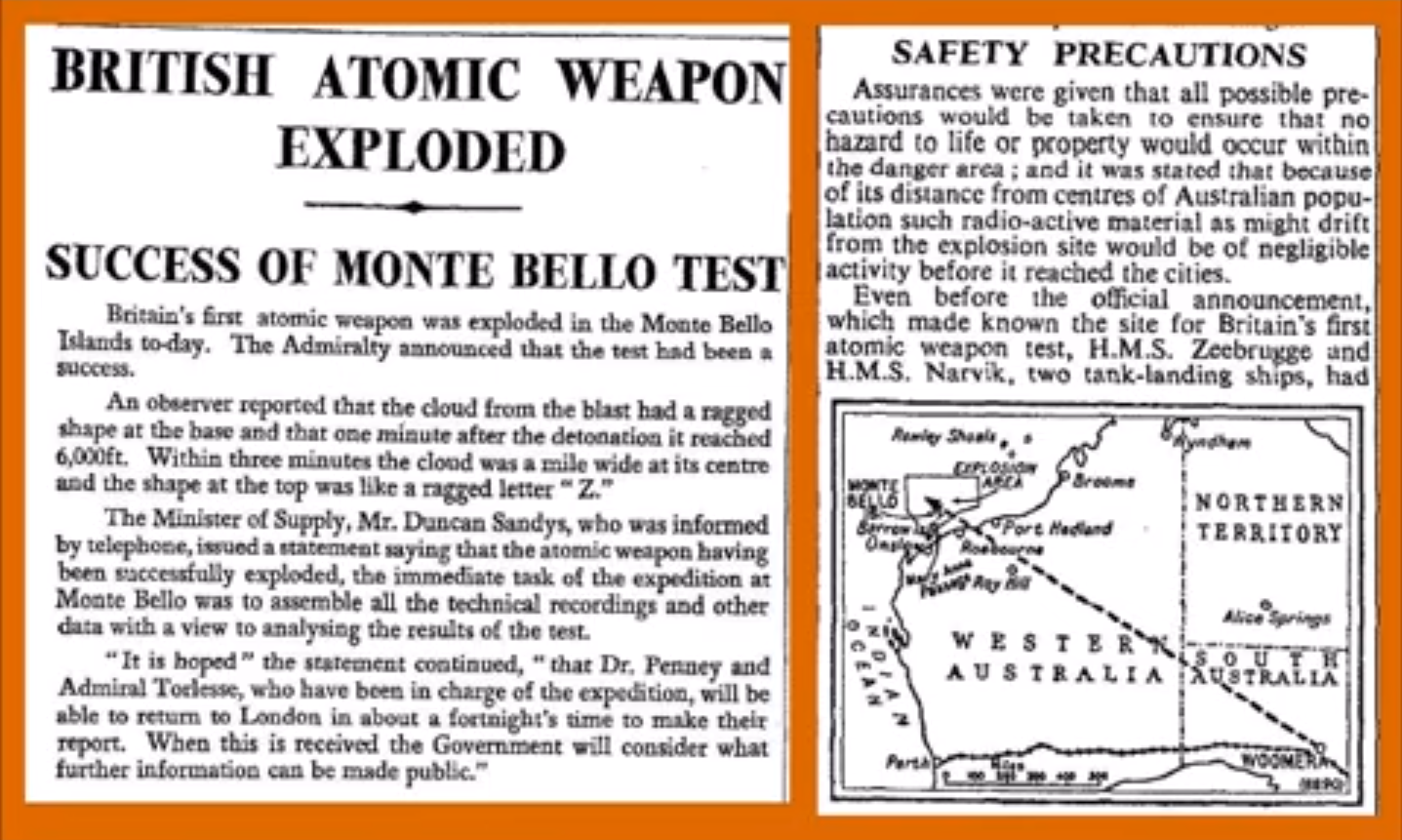
Figure 2. British test locations as presented during the podcast. Note: the source graphic labels the Pacific site 'Kiribati Island'; the relevant test island is Kiritimati (Christmas Island), now part of Kiribati.
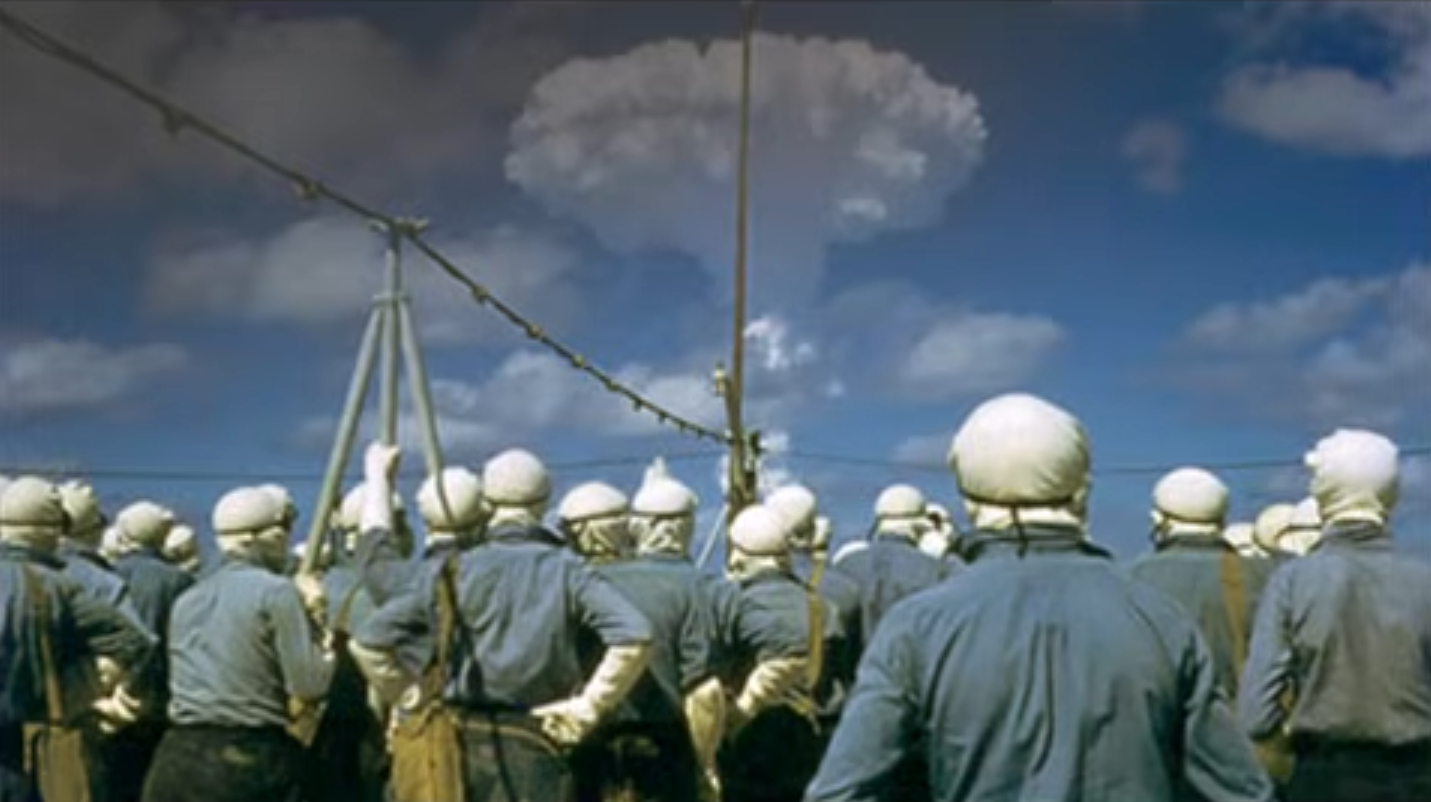
The programme also tested the ability of military equipment - and military personnel - to operate in a nuclear environment.
One of the most remarkable documented examples involved the Royal Navy destroyer HMS Diana during Operation Mosaic in 1956. A later parliamentary answer confirmed that Diana was required to steam through radioactive fallout clouds in order to test the vessel's ventilation and wash-down systems. The government subsequently said those systems worked and residual contamination was minimal.
Owen described RAF personnel flying aircraft through mushroom clouds to collect samples, followed by decontamination of the aircraft after landing. Army personnel built and maintained test-site infrastructure, while Royal Navy vessels and Royal Fleet Auxiliary personnel supported operations at sea.
These were not abstract laboratory experiments. Human beings were standing, sailing and flying in the environment created by the bomb.
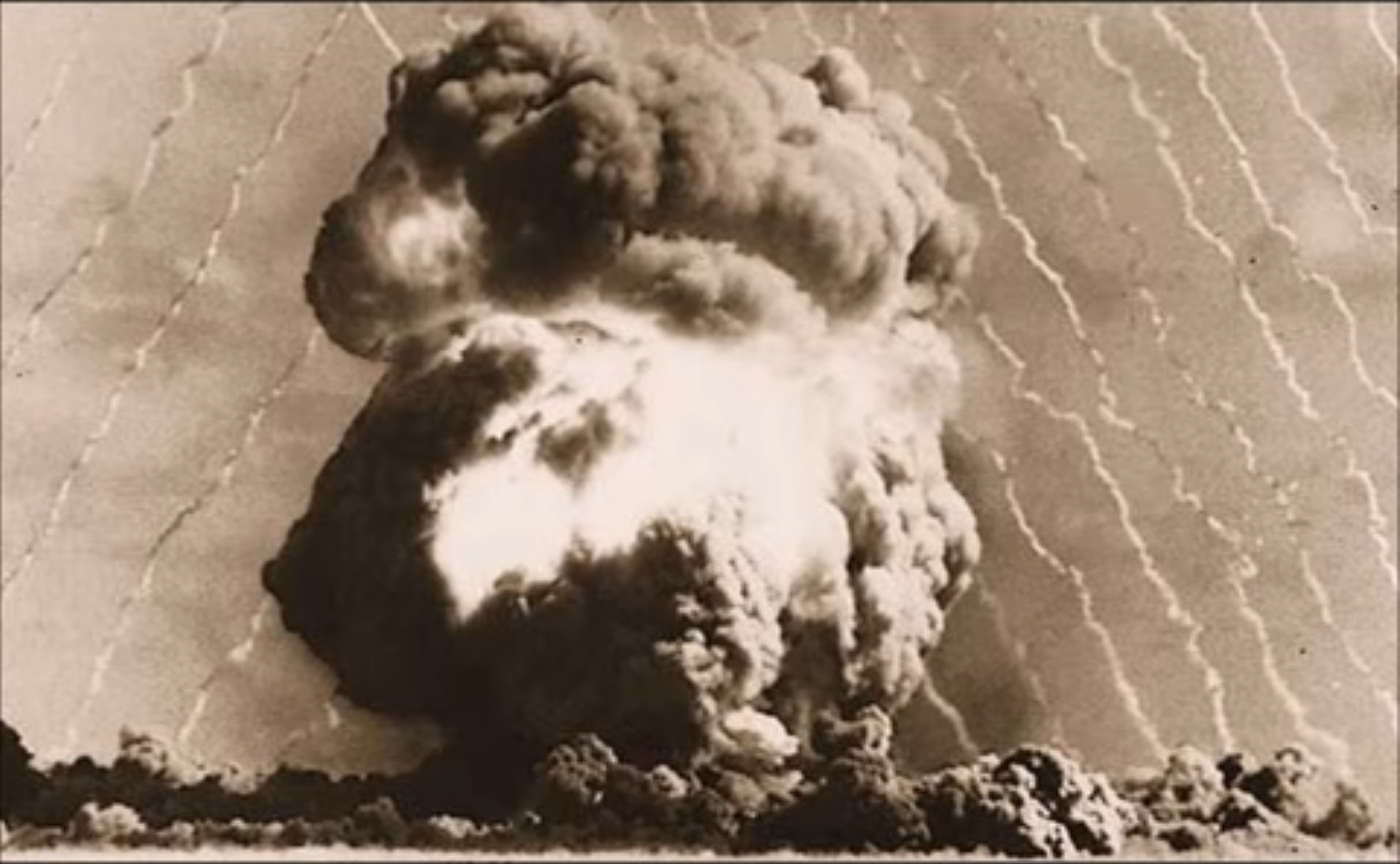
Figure 3. Contemporary press coverage of Britain's first atomic test at Monte Bello, reproduced in the podcast presentation.
Operation Grapple: Britain goes thermonuclear
The next stage was the pursuit of the hydrogen bomb.
During Operation Grapple, Britain conducted thermonuclear tests in the central Pacific in 1957 and 1958, principally around Christmas Island - today's Kiritimati - and Malden Island.
The explosive yields were now measured not merely in kilotons but in megatons.
Veterans have described facing away from the detonation with their eyes closed or covered, yet still experiencing an extraordinary flash of light, heat and blast. Owen recalled veterans describing the thermal pulse as feeling like a powerful electric fire behind the neck. Others said that when they put their hands over their closed eyes, the light was so intense that they could make out the bones and tendons in their hands.
Whatever one's position in the subsequent dispute over radiation dose, those memories are a reminder of how extraordinary the environment was.
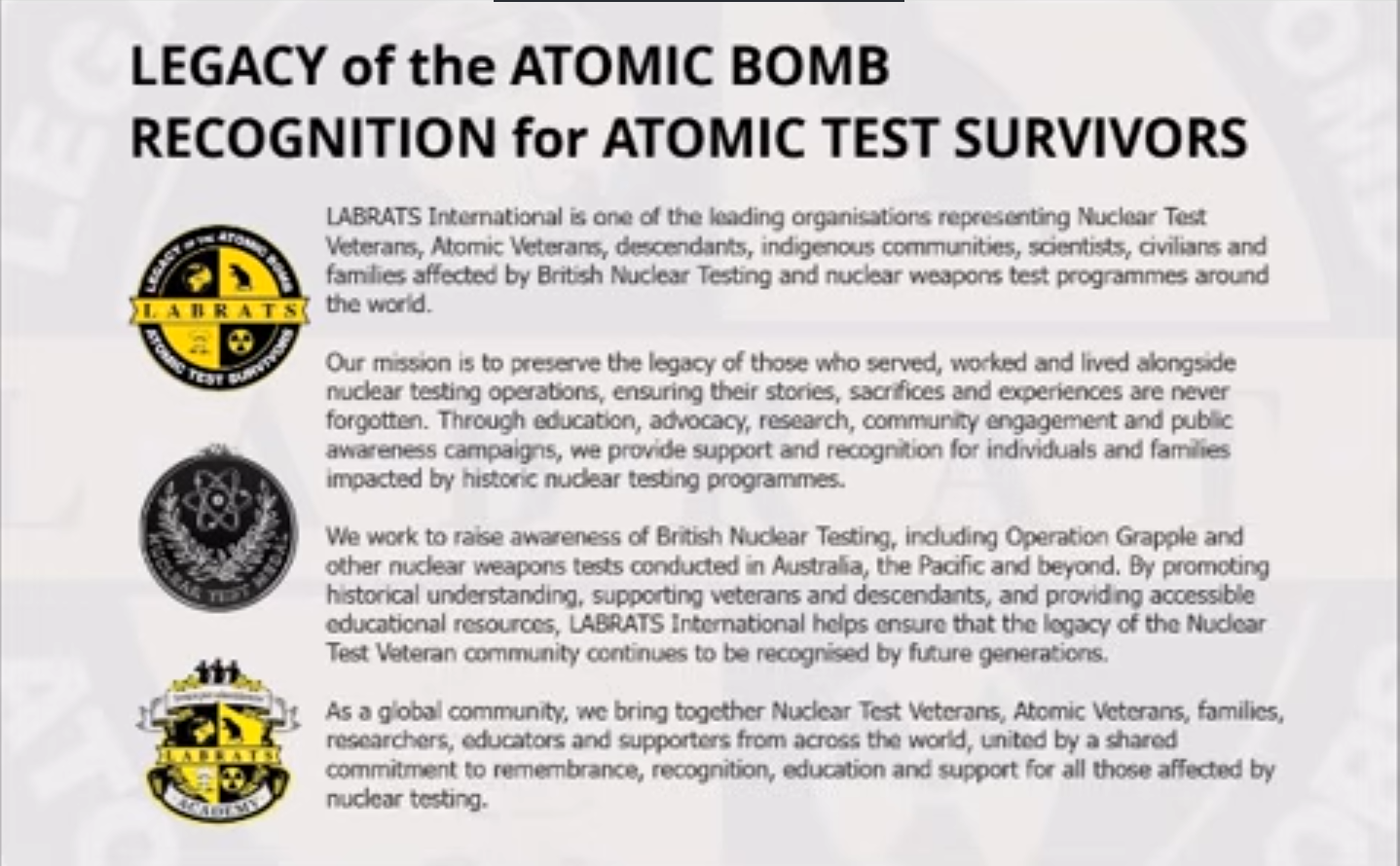
Figure 4. Nuclear detonation image shown during the podcast presentation.
By 1962, Britain and the United States were collaborating at Christmas Island on the huge American Operation Dominic atmospheric-testing programme.
This is where Alan Owen's own family enters the story.
His father, James Ronald Owen, was serving in the Royal Navy. Alan says his father witnessed 24 detonations in 78 days. Parliamentary records confirm that 24 tests were carried out in the Christmas Island series. British involvement in this part of Operation Dominic was referred to in UK terminology as Operation Brigadoon.
The testing came shortly before the 1963 Partial Test Ban Treaty halted nuclear explosions in the atmosphere, underwater and in outer space.
The argument did not end when the mushroom clouds disappeared
The bombs stopped exploding above the Pacific. The dispute about their human consequences did not.
By the 1980s, veterans were increasingly organising through the British Nuclear Test Veterans Association. Men who had served together were comparing illnesses: cancers, leukaemia, bone and dental problems, eye conditions and other diseases.
Owen's account is intensely personal. His father died in 1994, still in his early fifties. His elder brother died aged 31. His sister, he told me, was born blind in one eye and later had cancers removed. Owen himself suffered a cardiac arrest and has serious heart problems.
At the 2026 reunion, he asked veterans in the room about cancer. According to Owen, 29 of the 30 who responded reported having suffered cancer at some stage.
Those accounts do not by themselves establish medical causation. But neither can they simply be erased from the history of this dispute. They explain why veterans and descendants have continued asking for more research and access to records long after the testing programme ended.
The scientific picture is more complicated than either side's simplest version of the story.
The fourth major UK epidemiological analysis followed 21,357 test participants and 22,312 controls through 2017. It found overall mortality among test participants was around 2 per cent higher than among controls, while the relative risk for all cancers combined was around 3 per cent higher. The researchers said unmeasured background factors such as smoking or diet might account for such small differences.
One result was more pronounced. Incidence of leukaemia excluding chronic lymphatic leukaemia was 38 per cent higher relative to controls, while chronic myeloid leukaemia showed a relative risk of 2.43. The study stressed that it examined populations and could not determine whether a particular individual's illness had been caused by attendance at a nuclear test.
The question of effects on descendants is more uncertain still. A British family study using whole-genome sequencing reported no overall increase in de novo germline mutations among the offspring of the nuclear-test veterans studied, although it identified one mutation-signature signal whose significance required further investigation. The researchers also emphasised uncertainties around individual radiation doses.
In other words, the responsible position is neither to declare every illness caused by the bomb nor to pretend that every question has been conclusively closed. For families such as Owen's, that uncertainty is itself part of the grievance.
British nuclear test veterans and the records problem
This is where the story has become particularly important in recent years.
Veterans have long questioned what medical monitoring was carried out before, during and after the tests - particularly blood and urine testing - and what happened to the resulting records.
In July 2026, the Ministry of Defence published the findings of a major records exercise. The government said surviving evidence indicated that medical examinations or blood testing were required for the majority, if not all, of the nuclear-testing period across all three armed services. Blood testing was intended partly to establish fitness and, in some circumstances, a baseline against which possible radiation exposure could later be assessed.
The exercise also confirmed that some blood-test records are absent. It found cases where tests apparently should have taken place but did not, as well as records destroyed through administrative error. The Ministry of Defence's conclusion, however, was that it found no evidence of intentional concealment of medical records.
Campaigners do not regard that as the end of the matter.
Another important development concerns the Merlin database. Merlin was created by the Atomic Weapons Establishment between 2006 and 2008 at the Ministry of Defence's request, largely to identify documentary material relevant to litigation brought by nuclear test veterans. It contains tens of thousands of scanned historical records. The transfer of Merlin records from AWE to The National Archives began in September 2025.
For campaigners, the significance is obvious: records that were once buried inside defence archives are gradually becoming publicly searchable. That is not the same thing as proving every allegation made over the decades. But it gives researchers, journalists, veterans and families a larger documentary record against which competing accounts can be tested.
A medal - but no dedicated compensation scheme
There has been recognition.
The government announced the Nuclear Test Medal in November 2022. Production began in 2023, and veterans subsequently wore it at the Cenotaph. It can also be awarded posthumously to eligible next of kin.
For many veterans, however, recognition is not the same as redress.
As of September 2026, the British government says there is still no dedicated compensation scheme for nuclear test veterans and their families. Veterans who believe that service caused their ill health can instead apply through the existing War Pension Scheme.
That contrasts with the system developed in the United States.
During our interview, Owen referred to the American radiation compensation programme and dated it to 1984. There are in fact two strands of American legislation which can easily become conflated: Congress introduced a radiation-related veterans compensation framework in the 1980s, while the Radiation Exposure Compensation Act - RECA - was enacted in 1990.
RECA provides statutory payments to defined categories including qualifying participants who were onsite during atmospheric nuclear tests and subsequently developed specified diseases. By mid-2026, Department of Justice data showed awards running into billions of dollars across the programme and its later expansion.
The American and British systems are not directly identical, but the comparison explains why UK veterans repeatedly ask why Britain has never created an equivalent dedicated route.
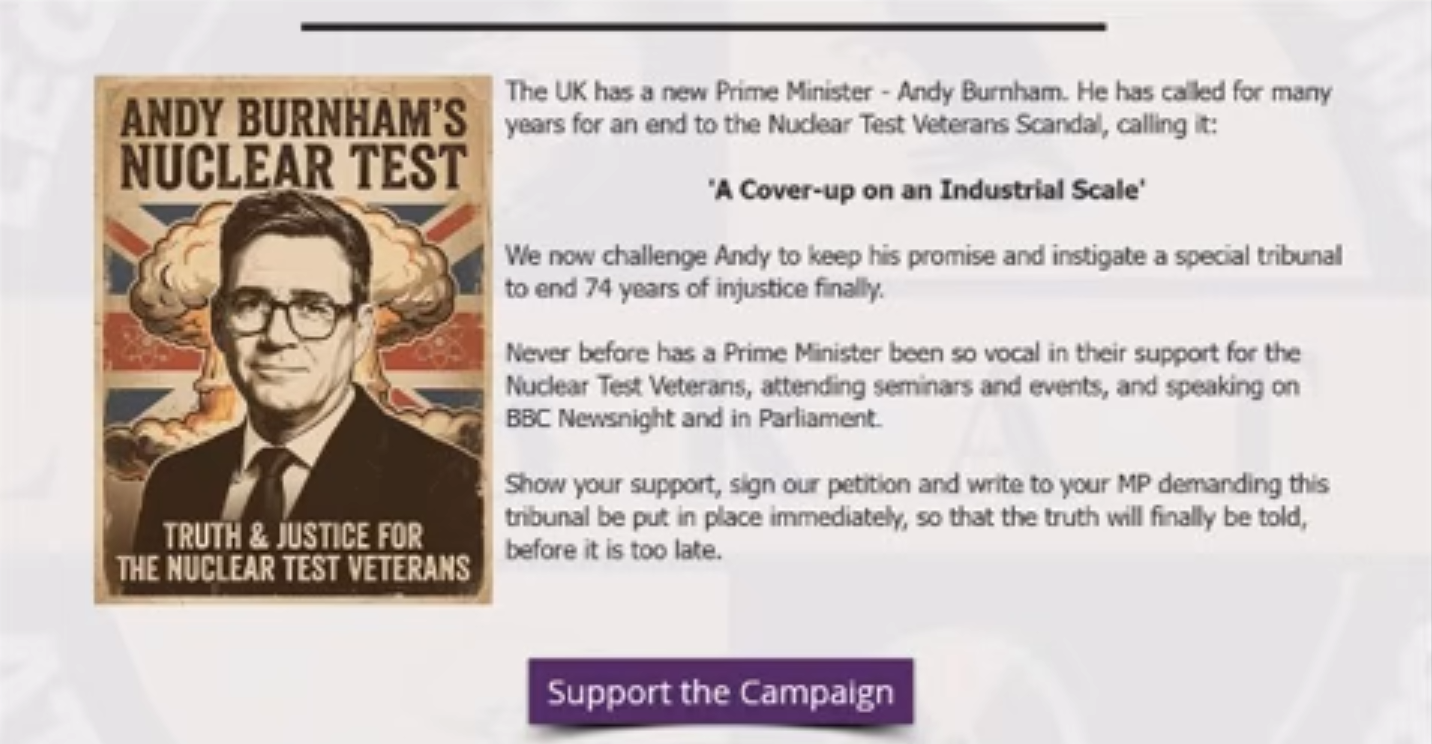
Figure 5. LABRATS International campaign explainer shown during the podcast presentation.
The proposed tribunal - and Andy Burnham
The political context has changed again.
Andy Burnham became Prime Minister on 20 July 2026, after returning to Parliament and becoming Labour leader.
Long before entering Downing Street, Burnham had publicly supported nuclear test veterans and raised concerns about their treatment. Campaign material from LABRATS cites his earlier description of the affair as a 'cover-up on an industrial scale'. The Ministry of Defence, by contrast, said in its July 2026 records exercise that it found no evidence of intentional concealment of medical records.
LABRATS now wants Burnham's government to establish a Truth, Justice & Legacy Special Tribunal for Nuclear Testing Veterans.
According to the campaign, a detailed proposal prepared with McCue Jury & Partners was sent to Burnham in July 2026. The suggested body would sit somewhere between ordinary litigation and a full public inquiry, with the aim of creating an independent mechanism to assess documentary evidence, responsibility and potential redress. That is LABRATS' proposal; the government has not yet established such a tribunal.
Owen's argument to me was straightforward: after decades in which the Ministry of Defence has been both custodian of many of the records and defendant to veterans' claims, campaigners want the remaining questions assessed outside the department.
The government's present position is also clear. It says it has conducted a substantial records exercise, found no evidence of intentional concealment, and already provides access to compensation through the War Pension Scheme rather than a nuclear-test-specific programme.
Those are the two positions now confronting each other.
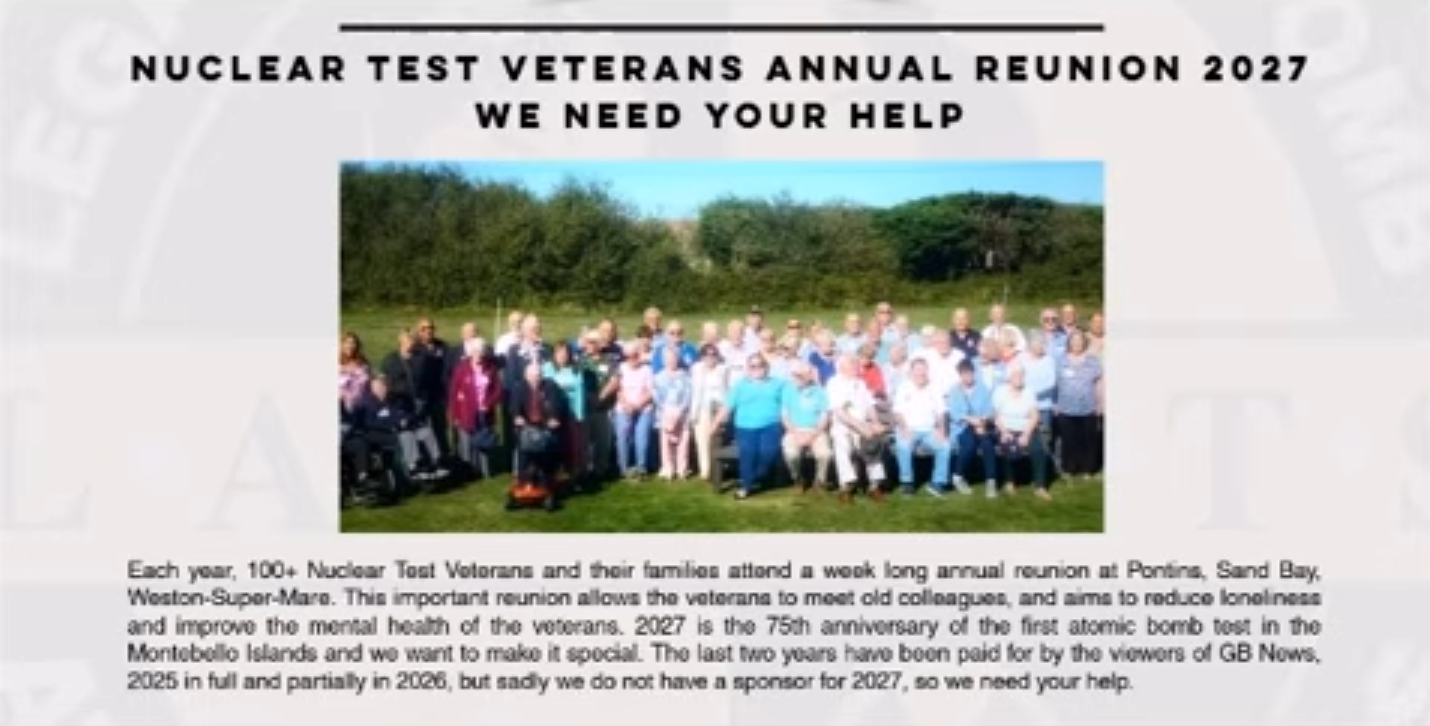
Figure 6. LABRATS campaign graphic calling for a special tribunal. This is advocacy material and should be read as the campaign's position, not as an independent finding.
How British is Britain's nuclear deterrent today?
There is another irony in the story.
During the programme I put the point rather too simply when I suggested that Britain's nuclear weapons today were essentially American. The documentary position is more precise - and more interesting.
Britain's Trident II D5 missiles are designed and manufactured in the United States. The UK has title to missiles drawn from a shared stock maintained at Kings Bay in Georgia.
But the warheads fitted to Britain's Trident missiles are not simply American warheads. The government describes the current Mk4A as a sovereign UK warhead, maintained by AWE at Aldermaston. Britain is now developing the replacement Astraea warhead.
So the British deterrent combines substantial American dependence - particularly the missile system and extensive nuclear cooperation - with a domestically maintained warhead capability.
There is still an historical irony here. The men sent to Australia and the Pacific helped establish an independent British thermonuclear capability. Today's system exists within a far deeper technological relationship with the United States than those early pioneers could have imagined.
Modern warhead development also does not require Britain to return to the atmospheric mushroom clouds of the 1950s. The government's 2026 nuclear-enterprise update describes computer modelling, high-energy-density physics, materials research and hydrodynamic trials as part of maintaining and developing the UK's warhead capability without explosive nuclear testing.
I also referred during the programme to Culham in Oxfordshire. For the written record, the distinction should be clear: Culham is officially the headquarters of the UK Atomic Energy Authority's fusion-energy programme, and the Joint European Torus was a fusion research machine. The publicly documented British nuclear-warhead programme is centred on AWE and associated defence laboratories, not JET.
Getting those distinctions right does not weaken the veterans' story. It makes it stronger.
What remains unresolved
The nuclear-test veterans controversy is sometimes reduced to a binary argument: either every illness suffered by every veteran was caused by radiation, or there was no problem at all.
The documentary record does not support such simplicity.
We know that Britain exploded nuclear weapons in Australia and the Pacific. We know that servicemen worked close to those operations. We know RAF aircraft sampled nuclear clouds and that HMS Diana deliberately sailed through fallout. We know medical and blood testing policies existed, that some records are now missing, and that some were destroyed through administrative error. We also know the Ministry of Defence says its investigation found no evidence those records were deliberately concealed.
We know that epidemiological research has found some elevated risks, including for particular forms of leukaemia, while other genetic studies have not established the broad inherited effects feared by many descendants.
And we know something else which is beyond dispute: thousands of young servicemen were sent halfway around the world to help Britain become a nuclear power.
The British state eventually gave them a medal.
Whether the surviving veterans and their families should receive a dedicated compensation scheme, whether the proposed special tribunal should be created, and how unresolved scientific and documentary disputes should be assessed are now questions for Parliament and government to answer.
Alan Owen and LABRATS have their position. The Ministry of Defence has its own.
But there is one factor neither side can negotiate with: age.
Figure 7. LABRATS graphic for the 2027 Nuclear Test Veterans Annual Reunion at Sand Bay, Weston-super-Mare.
In 2027, Britain will mark 75 years since Operation Hurricane and the mushroom cloud above the Monte Bello Islands announced its arrival as an atomic power.
The anniversary will undoubtedly produce official histories of Britain's nuclear deterrent, its strategic purpose and the scientists who built it.
There is another history standing beside it.
It belongs to the sailors, soldiers, airmen, scientists and civilians who were there when the bombs actually went off - and to the families still trying to establish exactly what those experiences meant.
For them, the atomic age is not quite history yet.
Reader comments
Subscribers can join the conversationSign in to join the conversation. Comments are open to everyone with a free account.
Sign in or create accountLoading comments…