Russia has intensified its engagement with the Taliban government in Afghanistan. Recently, Moscow invited a high-level Taliban military delegation to observe Russia’s Center-2026 strategic military exercises. The exercises were held from September 28 to October 3, 2026, across multiple training areas, including Russia’s Chelyabinsk region and the Caspian Sea. The countries that deployed military contingents were Russia, China, Belarus, Kazakhstan, Kyrgyzstan, Mongolia, and Tajikistan. The invitation underscores Moscow’s efforts to deepen military contacts with the Taliban and expand its engagement with regional security stakeholders. On the sidelines of the exercises, the Taliban delegation also met military representatives from India, China, and North Korea. Importantly, during the exercises, the Taliban delegation toured an extensive military equipment exhibition showcasing advanced hardware that included Russian Geran-4 and Geran-5 jet-powered tactical drones, next-generation unmanned ground vehicles (UGVs) and robotic combat platforms, heavy armor, and long-range precision missile systems.
Beyond observing the drills, emerging reports indicate that Russia is providing weapons and military technologies to the Taliban, either directly or through indirect channels, including via Belarus. This defense acquisition builds directly upon the earlier foundational military-technical cooperation agreement signed between Russian and Taliban defense officials on May 27, 2026. While the full text remains undisclosed, the agreement includes explicit provisions for the repair and maintenance of Soviet-era defense infrastructure already in the Taliban’s possession, alongside plans for Russia to establish technical training centers for Afghan personnel.
From Historical Rivalry to Strategic Engagement
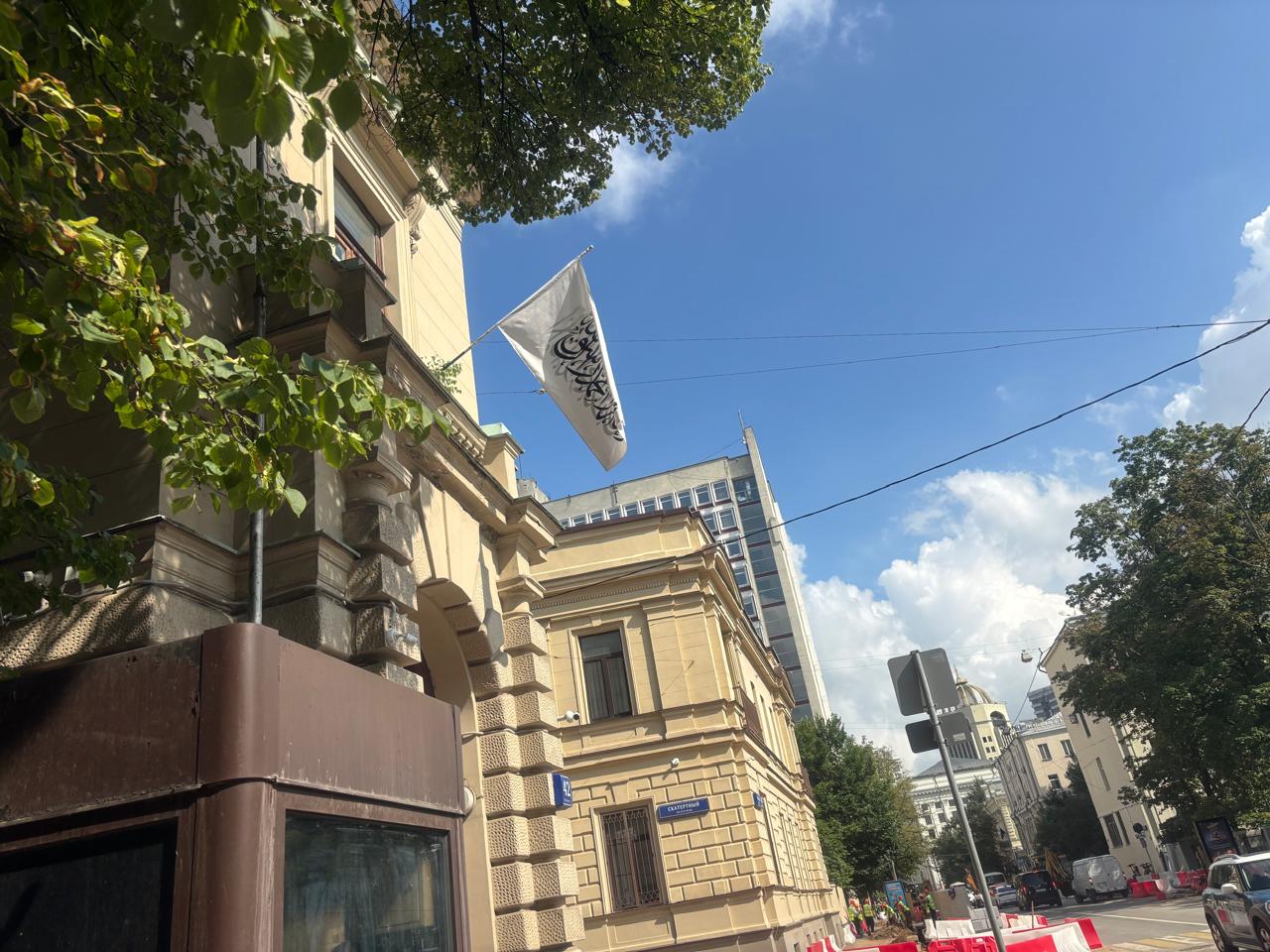
Russia has adopted a pragmatic approach to its engagement with the Taliban government. When the group took control of Afghanistan in August 2021, most countries closed their embassies, but Moscow kept its diplomatic mission in Kabul fully operational and subsequently intensified its bilateral engagement. This trajectory culminated on July 3, 2025, when Russia became the first major power to formally recognize the Taliban administration after officially removing the group from its state list of banned terrorist organizations via a Supreme Court ruling on April 17, 2025.
This embrace marks a stark reversal from Moscow’s historical policy, during which the two sides were on opposite sides of intense military conflict. During the Soviet-Afghan War (1979–1989), the Soviet Union fought against the multi-factional Mujahideen resistance fighters—the very fundamentalist factions from whose ranks elements of the Taliban later emerged in 1994. Throughout the 1990s, Russia strongly opposed the Taliban’s regime, designating them a terrorist organization in 2003 and actively supporting the anti-Taliban Northern Alliance coalition during the group’s first period of rule from 1996 to 2001. Following the 2001 U.S.-led invasion of Afghanistan, Russia aligned with global counterterrorism directives and provided vital logistical and intelligence support to the United States and NATO forces. However, changing geopolitical and regional realities gradually pushed Moscow towards greater engagement with the Taliban.
At the recent Moscow Format meeting, Russia strongly supported the Taliban government’s position on Afghanistan and backed its role in counterterrorism and combating narcotics. Russian Foreign Minister Sergey Lavrov endorsed the need to strengthen Afghanistan’s counterterrorism capabilities and acknowledged the Taliban’s role in combating terrorism. He stated, “I would emphasize that it is in our shared interest to help strengthen Kabul’s counter-terrorism capabilities by providing logistical and expert assistance and maintaining contacts between special services and security agencies.” He also criticised Western geopolitical maneuvers, calling any deployment of NATO military infrastructure in Afghanistan or its neighboring Central Asian countries “absolutely unacceptable” and warning that such a presence could destabilise the region.
The timing of this support is particularly important, given the deterioration of relations between Afghanistan and Pakistan and the recent escalation of tensions between the two countries. Pakistan has repeatedly portrayed Afghanistan as a hub of terrorism, while the Taliban government has accused Islamabad of destabilising the country. For the first time in the platform’s history, a joint statement was not issued. This failure was driven by intense bilateral friction, as the Taliban delegation objected to sections of the draft text that linked Afghanistan extensively to terrorism, rejecting references derived from Pakistan’s public stance. These developments have wider geopolitical implications, particularly for Russia and China, which have strategic and economic interests in the region.
Quest for Regional Stability and Strategic Influence
Russia has clear interests in Taliban-ruled Afghanistan. Moscow wants to prevent instability from spreading across Central Asia and does not want the United States or other Western powers to regain strategic influence in a region close to its security periphery. From this perspective, Pakistan’s growing engagement with Washington and its deteriorating relationship with Kabul raise concerns about the potential expansion of American influence in the region. Russia is therefore seeking to strengthen its ties with the Taliban and prevent Afghanistan from once again becoming a space for Western strategic competition.
Moscow also has an interest in preventing Afghanistan from descending into instability. An unstable Afghanistan could become fertile ground for terrorist organisations such as the Islamic State Khorasan Province (ISKP), which has demonstrated its ability to threaten Russian security. The group’s claimed responsibility for the March 2024 attack on the Crocus City Hall concert venue near Moscow highlighted the direct threat it poses to Russia. Moscow therefore views the Taliban’s fight against ISKP as an important component of its regional counterterrorism strategy. By strengthening the Taliban government’s counterterrorism capabilities, Russia hopes to contain the threat posed by militant groups operating in and around Afghanistan.
Beyond immediate defense concerns, Russia seeks to expand and secure its strategic presence in the broader region. Within this geopolitical framework, India’s cautious yet increasing engagement with the Taliban administration serves as an important stabilizing variable. India holds deep-rooted historical ties with Afghanistan and continues to command considerable goodwill among the Afghan population. For Moscow, New Delhi’s active diplomatic presence provides a reliable, aligned regional partner that shares the goal of preventing regional fragmentation. Crucially, India’s involvement helps curtail Afghanistan’s excessive structural or economic dependence on any single external patron, including China. Russia therefore views India’s regional diplomacy as fundamentally complementary to its own long-term efforts to anchor stability and shield its strategic interests in Eurasia.
Ultimately, Russia’s engagement with the Taliban aims to contain security threats, limit Western influence, and preserve its strategic position in Eurasia.

Reader comments
Subscribers can join the conversationSign in to join the conversation. Comments are open to everyone with a free account.
Sign in or create accountLoading comments…