Afghanistan’s diplomatic opening is an opportunity the West cannot ignore
Five years after the Taliban returned to power in Kabul, Afghanistan remains a country that much of the Western world prefers to discuss rather than engage with directly. For twenty years, the United States and its NATO allies fought a war there, spent enormous sums rebuilding institutions and eventually withdrew. But the country they left behind has not disappeared, nor have its strategic importance and the competing interests of regional powers.
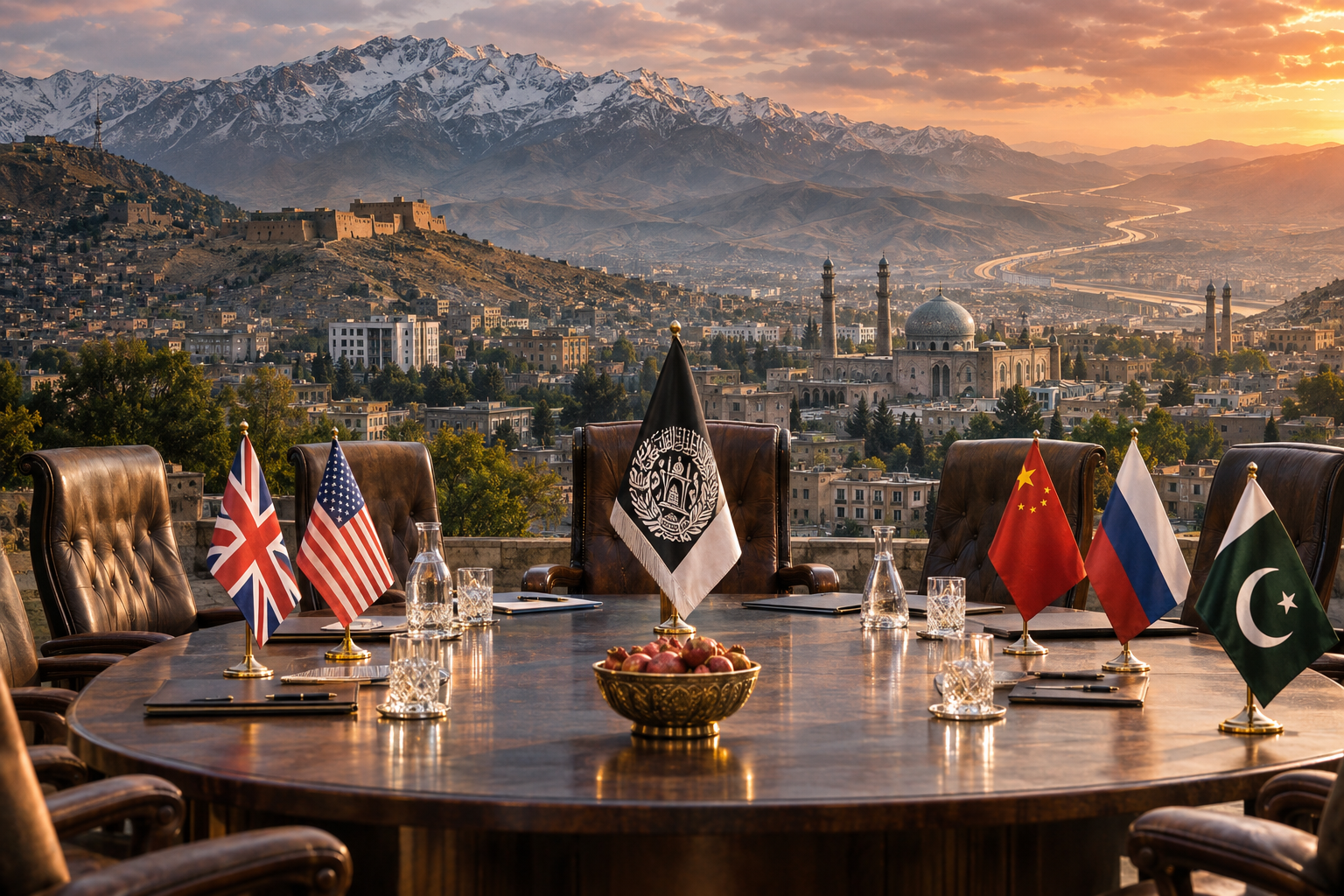
Russia formally recognised the Taliban administration in July 2025. China has developed direct diplomatic relations without taking the same formal-recognition step. Iran, Qatar, the United Arab Emirates, Turkey and Central Asian neighbours maintain channels with Kabul. Their approaches differ, but all recognise that Afghanistan must be dealt with as it exists.
Washington and London remain cautious, principally because of the Taliban’s restrictions on women and girls, political freedoms and unresolved terrorism concerns. Those objections are serious. The question is whether diplomatic distance has secured meaningful improvements, or merely diminished Western influence. Direct engagement is not political endorsement.
Kabul wants direct dialogue — and the West should listen
In my conversations with Afghan officials, I encountered a willingness to establish bilateral channels with Western governments without relying on Pakistan or other intermediaries. The officials indicated that Afghanistan wanted to conduct its foreign relations as an independent state, rather than through the prism of Pakistan’s security interests.
These conversations do not establish that all factions within the Taliban leadership agree, nor do they constitute a formally verified diplomatic proposal. They nevertheless suggest an opening worth testing. The United States negotiated directly with the Taliban in Doha before the February 2020 agreement. Dialogue with an adversary is not unprecedented; it is a basic instrument of diplomacy.
Why should Washington and London decline to communicate directly when Moscow, Beijing and Gulf capitals already maintain practical channels? If Western governments want better treatment of Afghan women, greater security cooperation and an economically viable Afghanistan, they need access to the people making decisions.
Pakistan’s strategic depth doctrine has reached its limits
For decades, elements of Pakistan’s military establishment viewed Afghanistan through the concept of strategic depth: the desire for a friendly government in Kabul that would accommodate Pakistan’s security priorities, particularly in relation to India. Historical links with Afghan Islamist movements did not, however, produce a permanently compliant neighbour.
The Taliban’s return to power in 2021 did not end tensions. Pakistan accuses Afghan authorities of allowing Tehreek-e-Taliban Pakistan militants to operate from Afghan territory; Kabul disputes those allegations. The threat of armed attacks is real and demands serious scrutiny. Yet border closures, expulsions, military pressure and cross-border strikes have deepened mutual distrust and damaged trade.
Afghanistan has strong incentives to diversify trade routes and diplomatic relationships. It is unrealistic to assume any Afghan government will accept permanent subordination to Pakistan’s military institutions. Western security cooperation with Pakistan should not give Islamabad a veto over Western relations with Kabul.
Russia, China and the region are filling the space
Moscow’s recognition of the Taliban government was a strategic decision. Russia seeks regional influence, security cooperation and commercial opportunities across Central Asia. Beijing has pursued a different route: diplomatic representation, economic engagement and counterterrorism interests without full formal recognition.
Iran has practical interests in border security, refugees, water and trade. Qatar and the UAE maintain diplomatic and commercial links, while Turkey has supported mediation. These governments do not necessarily trust Kabul, nor do their interests always align. They understand that isolation cannot erase Afghanistan from the map.
It would overstate the case to say China and Russia have secured uncontested control. Afghanistan has a long history of resisting outside domination. But countries maintaining access today are better positioned to shape tomorrow’s regional arrangements than countries that choose to stand aside.
Progress and profound failures coexist
The Taliban administration has shown some fiscal and administrative capacity. The World Bank’s May 2026 assessment estimated real GDP growth of 4.8 per cent, even as GDP per capita fell by an estimated 5.6 per cent amid population pressures and widespread hardship. Economic growth is not the same as improving living standards.
The ban on opium cultivation initially produced a remarkable reduction from around 232,000 hectares in 2022 to roughly 10,200 in 2025. UN reporting indicates a resurgence in 2026 to more than 43,000 hectares, still far below pre-ban levels. Any honest assessment must acknowledge both the initial change and the subsequent reversal.
The most serious barrier to international acceptance remains the treatment of women and girls. Secondary education for girls remains restricted; women face severe limitations on university access, work and public participation. UN agencies have documented extensive rights restrictions. These are fundamental human-rights issues, not simply cultural differences to be dismissed.
But condemnation from afar has not reversed those policies. Sustained diplomatic access could allow governments to press for verifiable improvements in education, employment, humanitarian operations and civil liberties. Engagement would not guarantee reform; it would create another means of pursuing it.
The economic and geographic stakes
Afghanistan links South Asia, Central Asia, Iran and the wider Eurasian region. Trade corridors, rail connections, energy projects and alternative routes through Iran could gradually reduce dependence on a single neighbour. These projects are difficult and expensive, and sanctions, financing and security concerns remain obstacles.
Western policymakers should not see Afghanistan solely as a counterterrorism problem. Agriculture, infrastructure, trade and financial access matter to Afghan livelihoods and to regional stability. Without a credible economic dimension, any Western diplomatic policy will be incomplete.
A direct Western policy, not a policy outsourced to Islamabad
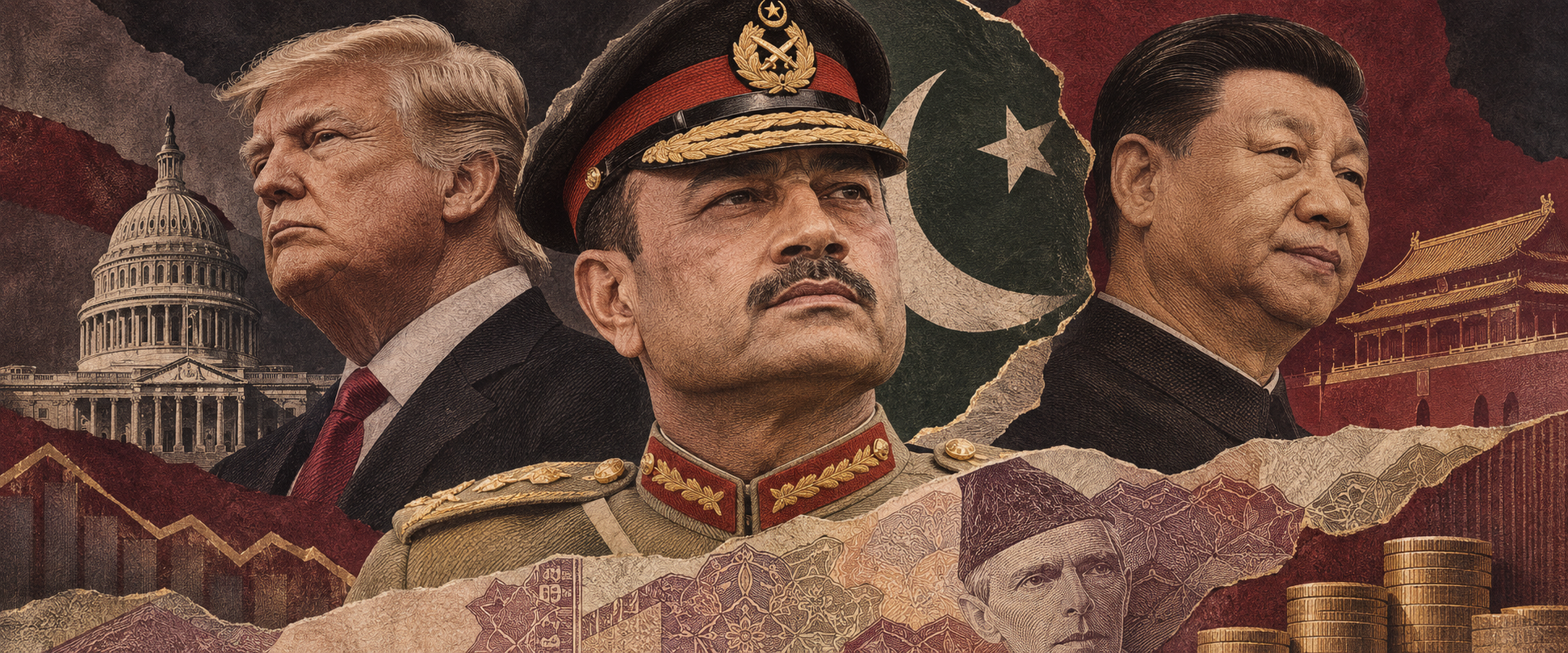
Pakistan remains an indispensable regional actor. Its security concerns deserve to be heard, and the threat posed by the TTP and other armed groups should not be minimised. But its military establishment has institutional priorities that do not necessarily coincide with Afghan, American or British interests.
The United States and Britain have the diplomatic and intelligence capacity to assess Kabul independently. They should maintain relations with Islamabad while establishing direct channels to Afghanistan. Cooperation with Pakistan is one thing; dependence on Pakistan as an interpreter of Afghan politics is another.
A practical approach would open regular bilateral dialogue, set measurable human-rights benchmarks, develop tightly safeguarded counterterrorism communication, examine viable economic connectivity projects and keep formal recognition separate from routine diplomatic engagement.
None of this requires pretending that the Taliban are liberal democrats. It requires accepting that Afghanistan’s future cannot be negotiated solely through neighbouring capitals.
The cost of repeating history
Afghanistan has repeatedly exposed the limits of outsiders trying to determine its future. The Soviet Union learned that through war; the United States and its allies learned it over twenty years; Pakistan’s military establishment now confronts its own limitations.
The Afghan officials I spoke with suggested that Kabul is interested in direct communication with Western governments. Their willingness should be tested, not romanticised. Diplomatic dialogue can be critical, conditional and demanding. It can press for rights and accountability while recognising Afghanistan’s sovereignty.
The West spent twenty years attempting to shape Afghanistan through military power. It would be a remarkable failure of diplomacy to refuse now to shape the relationship through direct conversation. And an even greater mistake to assume that the road to Kabul must always pass through Rawalpindi.
SELECTED SOURCES AND FURTHER READING
World Bank, Afghanistan Development Update (May 2026): https://www.worldbank.org/en/country/afghanistan
UNAMA, Human Rights Monitoring: https://unama.unmissions.org/en/unama-human-rights-monitoring-and-reporting
UNODC, Afghanistan Opium Survey: https://www.unodc.org/
US Department of State, Agreement for Bringing Peace to Afghanistan (February 2020): https://www.state.gov/
International Institute for Strategic Studies, Afghanistan analysis: https://www.iiss.org/
Reader comments
Subscribers can join the conversationSign in to join the conversation. Comments are open to everyone with a free account.
Sign in or create accountLoading comments…