The war on Iran has followed Washington to the ballot box. CBS News projected that Democrats would win a majority in the House of Representatives in the midterm elections, and they are set to take control of the Senate in January. President Donald Trump acknowledged on Wednesday 4 November that the war on Iran and higher fuel prices had contributed significantly to his party’s defeat, France 24 reported. Vice President JD Vance went further, describing the war as the main reason for the loss, according to Al Jazeera.
The results followed remarks Trump made to Fox News on the morning of Election Day, when he said Washington would stop about $4 billion in aid to Israel by the end of the year because ‘they don’t need it’, CNN reported. He asked why Republicans should bear criticism from candidates such as Abdul El-Sayed, the Democratic Senate nominee for Michigan, who went on to win the seat and become the first Muslim elected to the chamber, according to the Associated Press. Trump said Netanyahu had raised the idea, but the details and timing of the move have not been set out. The current aid agreement provides about $3.8 billion a year through 2028.
In Tehran, the reaction was triumphant but guarded. Mohsen Rezaei, secretary of Iran’s Supreme National Security Council, wrote on X that the Iranian people had inflicted a ‘strategic defeat’ on Trump on the battlefield and in the Strait of Hormuz, in addition to a political defeat in Washington, Al Jazeera reported. Parliament Speaker Mohammad Bagher Ghalibaf said Americans had said ‘no to war’ and that Tehran backed the message. However, Reuters, citing two senior Iranian sources, reported that the leadership fears Trump could order a new strike to offset his loss, while a statement attributed to Supreme Leader Mojtaba Khamenei said Iran does not expect the results to change Washington’s approach towards it.
The result gives Tehran a political narrative as much as a bargaining chip: that an American public weary of the war and its costs is pushing Washington towards the negotiating table. But the new Congress will not take office until January, leaving Trump free to act in the interim, a window Iranian officials themselves fear. Even so, the vote may shift both sides’ calculations. If renewed strikes carry a heavy price in US domestic politics, Washington’s appetite for talks may rise, while Tehran may feel less pressure to concede on inspections and enriched uranium. Whether that brings a deal closer or makes a miscalculation more dangerous is the question facing the Maccah Pact mediators today.
That question was already pressing before the vote. In the weeks leading up to the election, Washington and Tehran had edged closer to a new confrontation, even as regional powers raced to keep the diplomatic track alive.
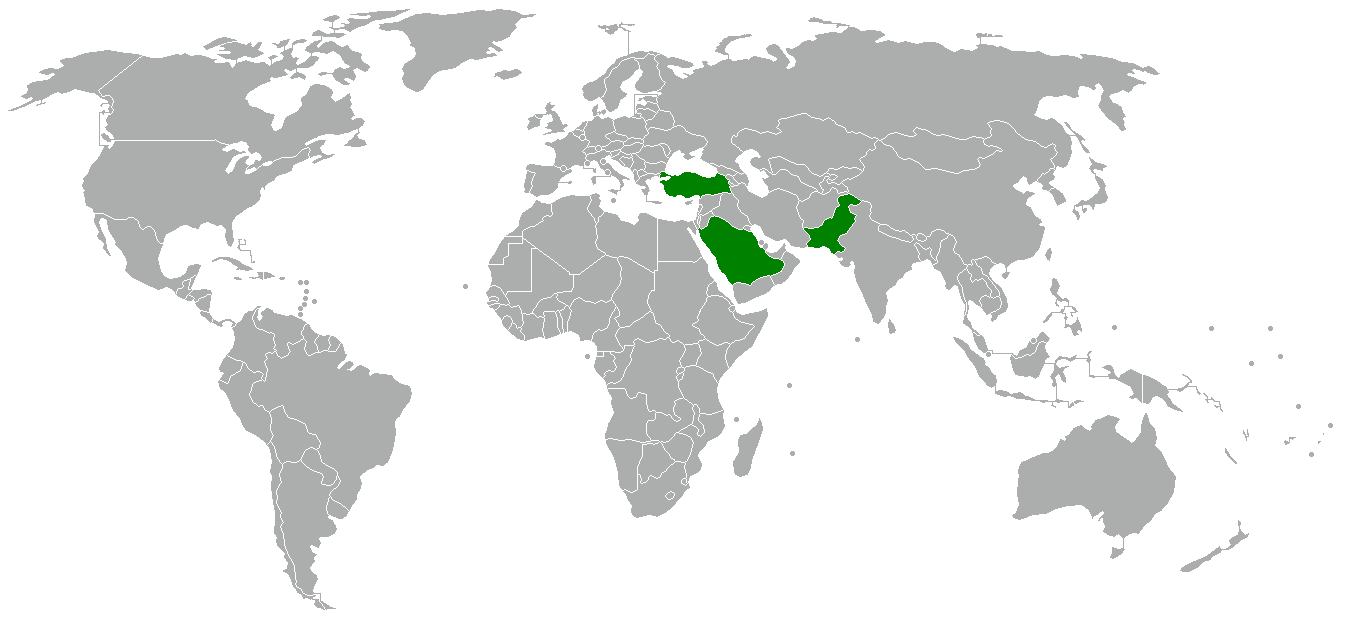
On Monday 26 October, a Saudi military transport plane landed in Tehran carrying delegates from the Makkah Pact, a defence agreement signed in August by Saudi Arabia, Türkiye and Pakistan. The visit shows that regional powers now see mediation as a security necessity, but it does not yet show that Washington and Tehran are any closer on the issues that matter most.
‘Mother of All Bombs’ Threat vs. Strikes on Gulf Assets
In a dangerous escalation, Trump threatened to drop the ‘mother of all bombs’ on Iran. According to CNN, the US military has drawn up plans to hit Iran’s energy infrastructure and nuclear sites should Trump give the green light.
Tehran, for its part, dismissed the threats, warning that its military is on high alert and that the region would never be the same if Iran were attacked. It vowed to respond to any strike on its territory by targeting US military installations in Gulf states.
Both sides appear to be using threats as leverage rather than as a prelude to action. But with forces on high alert and Gulf bases named as targets, a miscalculation could turn rhetoric into war within days.
Munir’s Mediation Push
Pakistan and Qatar have put forward a compromise proposal aimed at narrowing differences between the United States and Iran. Sources cited by Arab media outlets and other reports say both sides have agreed to the plan in principle.
The move coincided with a visit to Tehran by Pakistani army chief Field Marshal Asim Munir for high-level talks with Iranian officials, in what appears to be Islamabad’s last-ditch effort to end the conflict between Iran and the United States.
The proposed arrangement would reputedly include the release of $6 billion in frozen Iranian assets.
Tehran has categorically rejected transferring its enriched uranium out of the county. Mohsen Rezaei, secretary of Iran’s Supreme National Security council, reaffirmed the stance, Mehr news agency reported.
Not even a small amount of enriched nuclear material will leave Iran, Rezaei said while receiving the Pakistani army chief. ‘These resources are an important asset and a national treasure for the Iranian people, and they are meant for domestic use’.
He added that negotiations would not resume until Washington takes confidence-building steps, starting with meeting Iran’s conditions.
Meanwhile, Iranian Foreign Minister Abbas Araghchi said talks with the United States are continuing through Qatari and Pakistani mediation, insisting that Iran ‘will never surrender’.
This mixed messaging may reflect a division of labour between Iran’s security establishment and its diplomats, or a deliberate effort to keep options open. Either way, it leaves mediators negotiating with two tones at once.
The Mecca Pact
Tasnim news agency quoted Ali Bagheri Kani, deputy secretary of Iran’s Supreme National Security Council, as saying senior officials from Saudi Arabia, Turkiye and Pakistan would visit Tehran. He named them as Saudi Defence Minister Prince Khalid bin Salman, Pakistani army Chief Munir and Turkish intelligence chief Ibrahim Kalin.
A senior Pakistani security official told Reuters the meeting focused on building a regional non-aggression network. The agenda also covered U.S -Iran talks, Houthi attacks on Saudi Arabia, the Strait of Hormuz and the US blockade of Iranian ports, the official added.
On the other side, the United States and European countries argue that any deal to prevent renewed military strikes on Iran would require a major concession from Tehran: allowing international inspectors back in to examine the nuclear facilities that were bombed.
Britch foreign secretary Ed Miliband raised the issue directly with his Iranian counterpart Abbas Araghchi in New York, but Iran has so far declined to give a firm commitment, saying only that it is ready to discuss the general framework of its nuclear program.
For now, the Maccah Pact has bought time. Whether that time is used to build a deal, or merely to prepare for the next round of threats, will depend on whether Washington and Tehran are willing to move on the two issues, inspections and enriched uranium, that have defeated every previous round.

Reader comments
Subscribers can join the conversationSign in to join the conversation. Comments are open to everyone with a free account.
Sign in or create accountLoading comments…