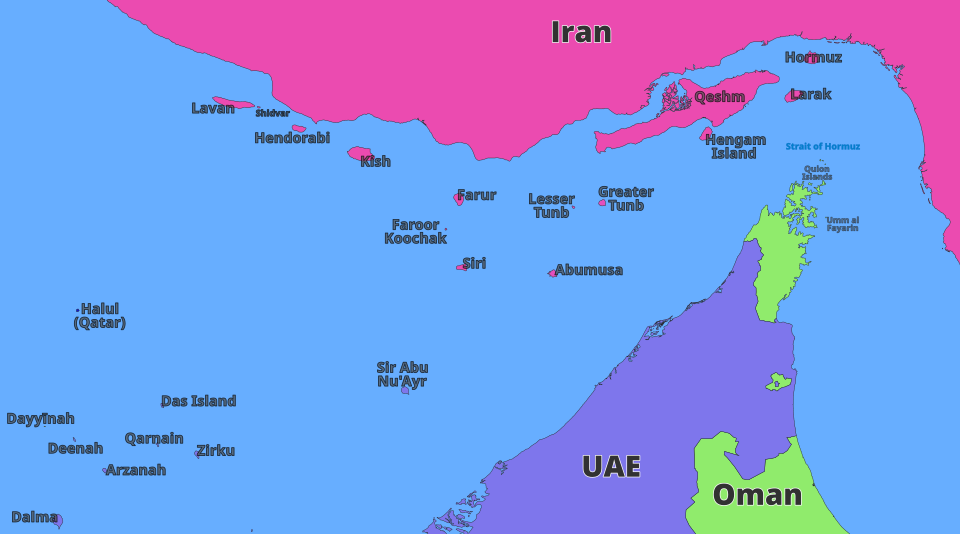
The United States and Iran have exchanged attacks across the Middle East for a tenth consecutive day as Pakistan attempts to revive an interim ceasefire that collapsed earlier this month.
Iranian Interior Minister Eskandar Momeni travelled to Islamabad on Tuesday for meetings with Prime Minister Shehbaz Sharif and Pakistan’s military leadership. Pakistan helped broker the earlier agreement and is seeking to persuade both sides to return to negotiations, but there was no indication that a new settlement was close.
The diplomatic effort is taking place as shipping through the Strait of Hormuz remains largely stalled. The waterway carried about one-fifth of the world’s crude oil and natural gas before the conflict, making control of the route central to both the military confrontation and its economic consequences.
According to the Associated Press, Iran attacked a tanker in the strait on Tuesday, forcing its crew to abandon the vessel. Iran’s Revolutionary Guard claimed responsibility for that attack and two others on Monday. The United States continued airstrikes against Iranian military command centres, maritime capabilities, missile and drone launch sites and air-defence systems.
Iran also continued attacks on US allies in the region. Jordan said it intercepted Iranian missiles and drones, while warning sirens sounded in Bahrain and Kuwait. Kuwaiti authorities said desalination and power infrastructure had been struck for a fourth consecutive day, adding a direct civilian risk to a conflict already threatening trade and energy supplies.
The crisis is spreading beyond the Gulf. Iran-backed Houthi rebels in Yemen have declared a maritime embargo against Saudi Arabia at the Bab el-Mandeb strait, the southern gateway to the Red Sea. Houthi-linked media claimed several ships had rerouted after receiving warnings, though that claim had not been independently confirmed at the time of reporting.
The Red Sea threat is especially significant because Saudi Arabia has relied more heavily on its east-west pipeline and Red Sea export terminals while traffic through Hormuz has been restricted. A serious disruption at both chokepoints would force tankers onto longer routes and could raise shipping, fuel and insurance costs worldwide.
Benchmark Brent crude traded at about $91 a barrel on Tuesday, while US petrol prices reached an average of $4 a gallon, according to AP. The economic pressure is adding to domestic political concerns in Washington as the conflict continues ahead of the US midterm elections.
President Donald Trump said the United States had no interest in meeting Iranian officials until Tehran was prepared for what he called meaningful talks. Sharif, by contrast, urged restraint and warned against actions that could further destabilise the region.
The diplomatic channel remains open, but the military facts on the water are moving faster than the negotiations. Unless the attacks slow, Pakistan’s effort may become less an attempt to restore the previous ceasefire than a search for a new arrangement in a conflict that has already expanded beyond the Strait of Hormuz.


Reader comments
Subscribers can join the conversationSign in to join the conversation. Comments are open to everyone with a free account.
Sign in or create accountLoading comments…