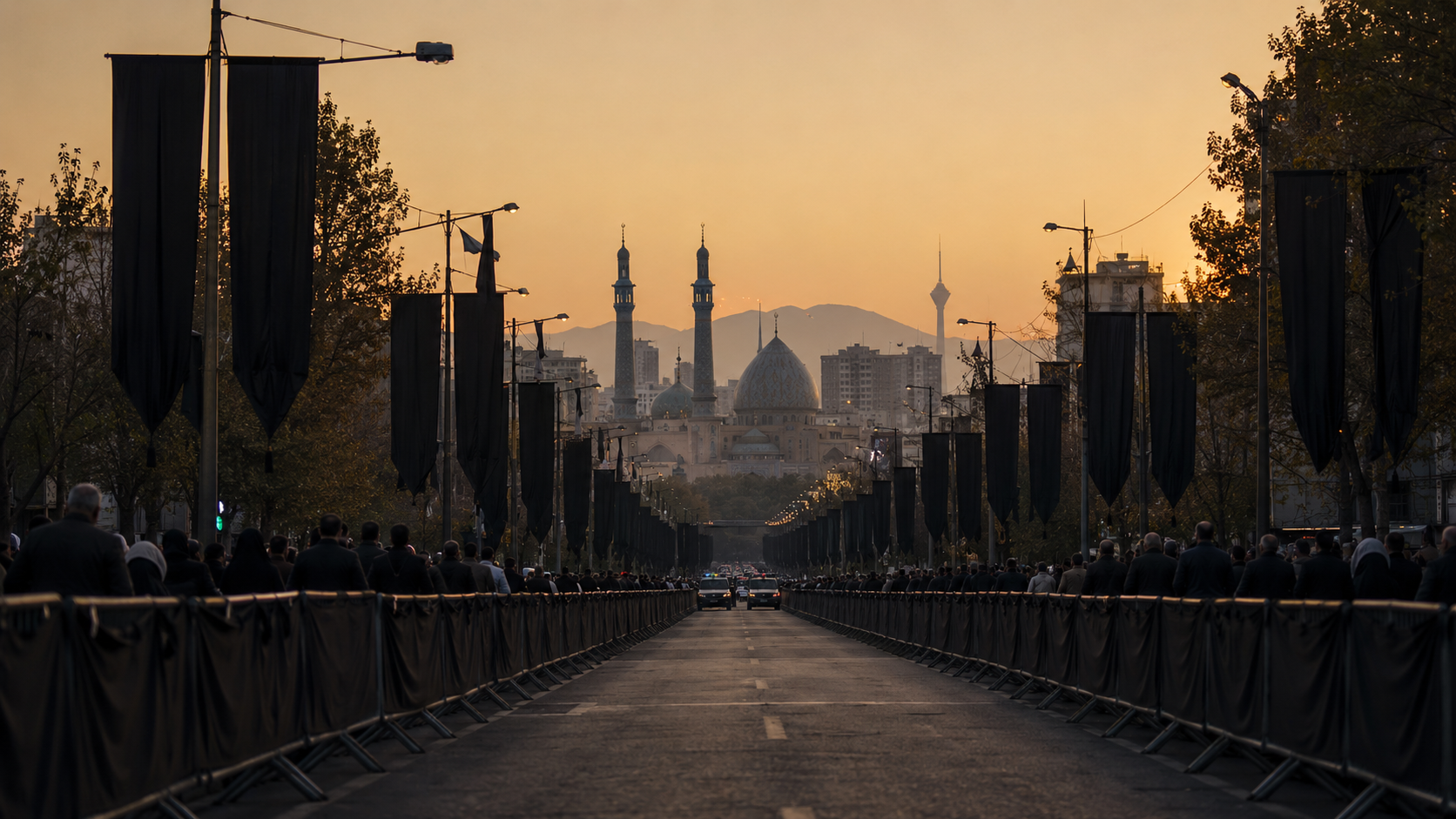
Iran is preparing a dayslong funeral for Ayatollah Ali Khamenei, turning the burial of the late supreme leader into a major political ritual at one of the most unstable moments in the Islamic Republic's recent history.
The ceremonies, reported by the Associated Press and other international outlets, are expected to begin in Tehran before moving through other religiously significant locations. Iranian authorities are presenting the funeral as a moment of national mourning and defiance after the war with the United States and Israel.
The political significance extends beyond the burial itself. Khamenei's son and successor, Mojtaba Khamenei, has not made a verified public appearance in the accounts reviewed for this report. That absence matters because Iran's leadership system depends heavily on the image of continuity, especially after a conflict that exposed military, economic and diplomatic vulnerabilities.
Officials are likely to use the ceremonies to demonstrate state control and mass mobilisation. But any claims about turnout should be treated cautiously until the processions occur and independent estimates are available. Previous funerals for major Iranian figures have drawn enormous crowds, but official crowd claims in Iran are often politically loaded.
The funeral also overlaps with negotiations over the future of the Strait of Hormuz and a broader post-war settlement. That makes the ceremonies part mourning event, part succession theatre and part diplomatic backdrop. For Tehran, the immediate goal is to show that the state remains coherent. For outside powers, the question is whether that display masks unresolved disputes inside the ruling elite.
Reader comments
Subscribers can join the conversationSign in to join the conversation. Comments are open to everyone with a free account.
Sign in or create accountLoading comments…