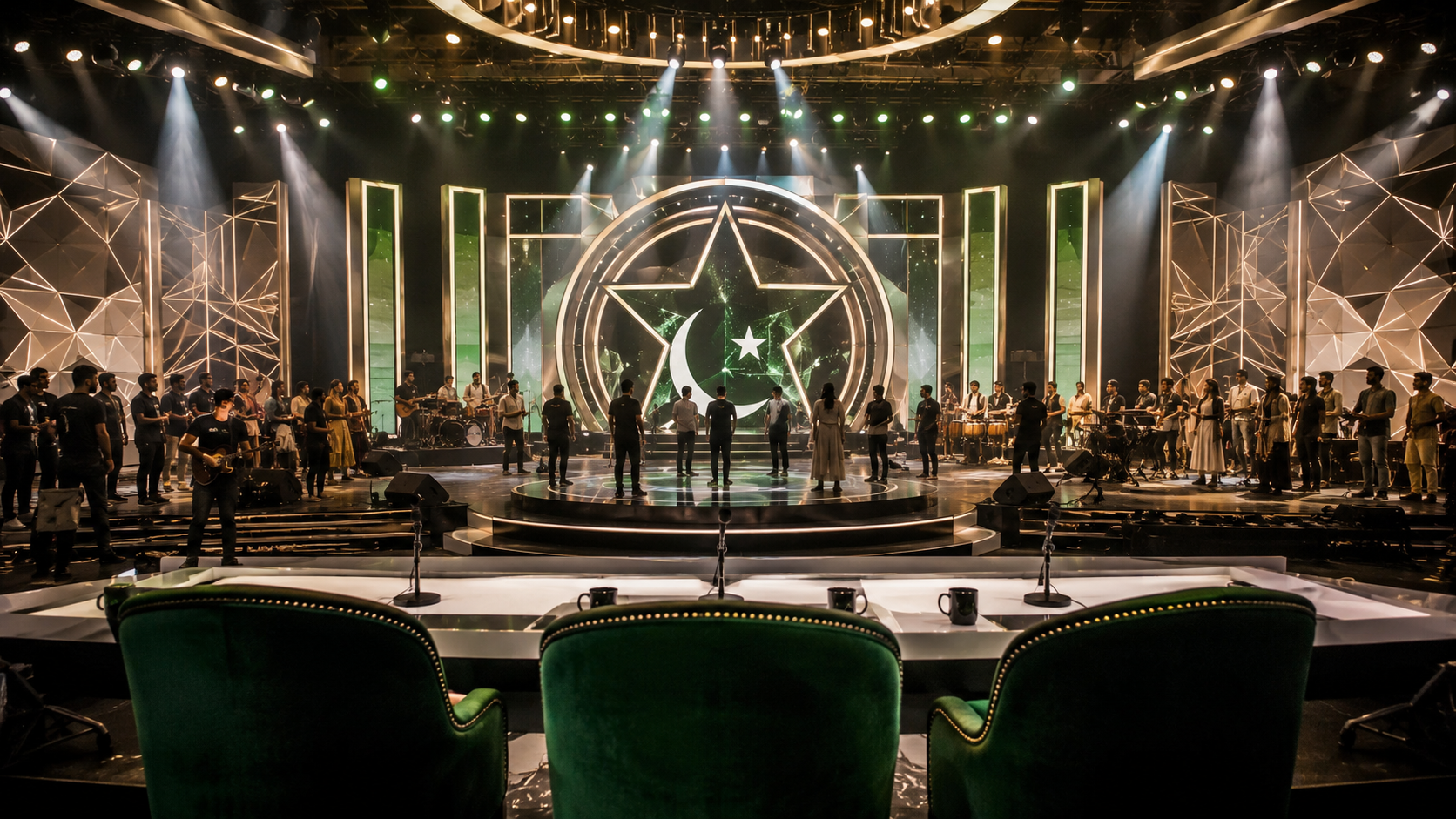
Pakistan’s entertainment industry is preparing for the launch of Pakistan’s Got Talent this week, with the debut season set to bring one of the world’s most recognisable reality television formats to a national audience.
The show is scheduled to launch on 4 July, with singer and actor Ali Zafar, actress Mehwish Hayat and comedian-host Tabish Hashmi confirmed as judges.
The arrival of the franchise marks a significant moment for Pakistani television, offering a platform designed to showcase performers from across the country, including singers, dancers, comedians, magicians, variety acts and other entertainers hoping to reach a wider audience.
A Major New Talent Platform
Pakistan’s Got Talent is based on the globally recognised Got Talent format, which has been adapted in countries around the world and has become known for turning unknown performers into national and international names.
For Pakistan, the format carries particular significance.
The country has a deep entertainment culture, but many performers outside major cities struggle to access national platforms. Local singers, comedians, dancers and stage performers often rely on social media, small venues or regional competitions to gain attention.
A national talent-show format could give those performers a larger stage.
The show’s central promise is simple: talent can come from anywhere. That message is likely to resonate strongly in a country where creative ability is spread across major cities, small towns and rural communities, but where opportunity is often unevenly distributed.
A Star Judging Panel
The first season will be led by a judging panel that brings together music, film, television and comedy.
Ali Zafar joins the show as one of Pakistan’s most recognisable entertainers, with a career spanning music, acting and live performance. His presence gives the panel a strong link to the country’s music and performance industry.
Mehwish Hayat brings film and television experience to the judging table. As one of Pakistan’s best-known screen performers, she adds a perspective shaped by acting, celebrity culture and mainstream entertainment.
Tabish Hashmi, known for comedy and hosting, brings a different energy to the panel. His role is likely to give the show a lighter, more conversational tone, particularly for contestants whose acts rely on timing, humour and audience connection.
Together, the three judges appear designed to cover a broad range of performance styles rather than focusing only on singing or acting.
Why the Format Matters
Pakistan has produced major singers, actors, comedians and performers for decades, but the country’s entertainment industry has often lacked consistent national platforms for discovering new variety talent.
Music competitions and drama-based programming have had their place, but the Got Talent format is broader.
It allows different kinds of performers to share the same stage.
That variety is part of the appeal.
A singer from Lahore, a dancer from Karachi, a magician from Islamabad, a comedian from Faisalabad or a folk performer from rural Sindh could all, in theory, compete within the same national framework.
The show could therefore become more than another entertainment programme. If handled well, it could become a showcase for Pakistan’s cultural diversity.
A Test for Pakistani Television
The launch also comes at a time when television faces growing competition from digital platforms.
Pakistani audiences now consume entertainment across YouTube, TikTok, Instagram and streaming services, where short-form clips can turn unknown performers into viral figures overnight.
Pakistan’s Got Talent will need to compete in that environment.
Its success may depend not only on television ratings, but also on whether performances from the show travel across social media and generate wider public conversation.
The format is well suited to that challenge. Talent-show performances often work as short, shareable clips, especially when they involve emotional stories, surprising skills or dramatic stage moments.
For broadcasters and producers, the question will be whether Pakistan’s version can capture that same momentum.
Opportunity and Pressure
The show also carries pressure.
International franchises succeed when they feel both familiar and locally rooted. Pakistan’s Got Talent will need to balance the global identity of the Got Talent format with the specific sounds, humour, languages and cultural traditions of Pakistan.
That could become one of its strengths.
Pakistan’s performance culture is not limited to one language, region or style. A successful season could bring together Urdu, Punjabi, Pashto, Sindhi, Balochi and regional folk traditions alongside modern pop, comedy, dance and digital-age performance.
The challenge will be ensuring that contestants from different backgrounds are treated seriously and given space to show what makes their work distinctive.
A National Stage
For aspiring performers, the show offers the possibility of national recognition.
For Pakistan’s entertainment industry, it offers a chance to discover new personalities at a time when audiences are increasingly open to fresh faces.
For viewers, it promises a programme built around performance, competition and emotional storytelling.
The debut season will ultimately be judged by whether it can deliver memorable acts and create genuine public excitement.
But even before launch, Pakistan’s Got Talent has already generated interest because of what it represents: a national stage for a country with no shortage of talent, but not always enough platforms to showcase it.
As the show prepares to begin, its biggest question is whether it can turn that promise into a lasting entertainment success.

Reader comments
Subscribers can join the conversationSign in to join the conversation. Comments are open to everyone with a free account.
Sign in or create accountLoading comments…