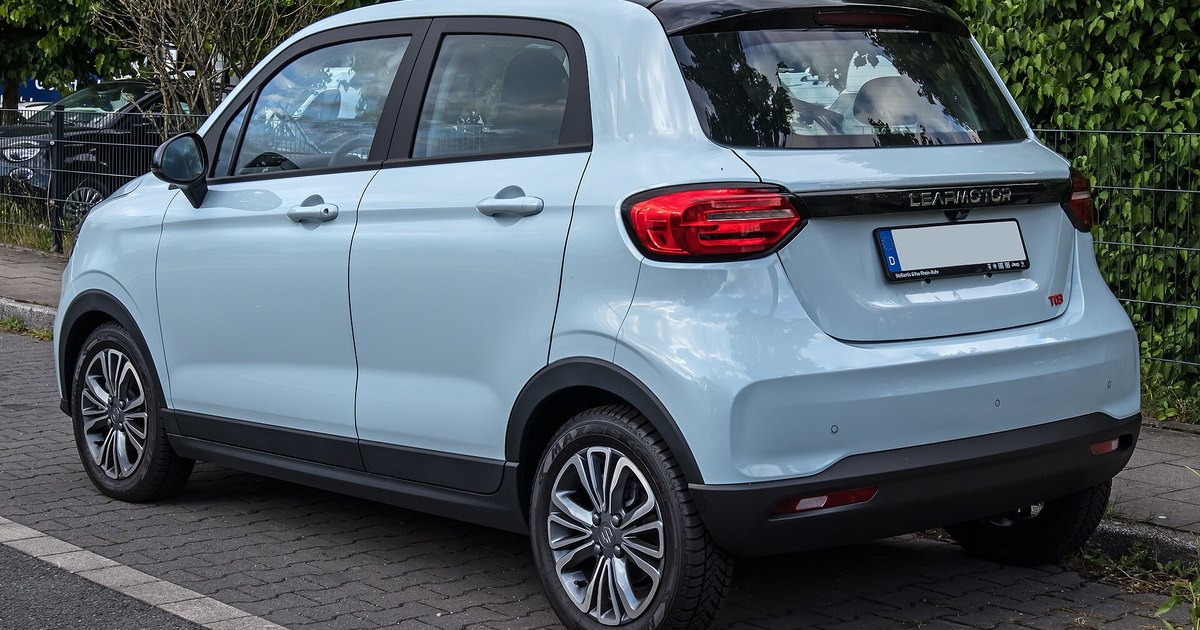
Chinese electric-car brands captured a record 14.2% of the battery-electric market across western Europe in the first five months of 2026, selling 171,800 vehicles and intensifying pressure on governments and established manufacturers over how to respond to China's automotive expansion.
Figures from Schmidt Automotive Research mean roughly one in seven battery-electric cars sold across the major western European markets came from a Chinese brand. Their share rose by nearly five percentage points compared with the same period last year.
One in seven electric cars
Brands including BYD, Chery, SAIC and Xpeng have widened their European line-ups rapidly. Chinese companies now offer more than 120 models in Europe, compared with about 100 from European brands, while the wider electric market is also growing. ACEA said battery-electric cars reached 20.7% of new EU registrations in the first half of 2026, up from 15.6% a year earlier.
Tariffs have not stopped the advance
The European Union imposed countervailing duties on China-made battery electric vehicles after an anti-subsidy investigation. The additional rates vary by producer and can reach 35.3%, on top of the standard import duty. The measures have changed company strategies but have not prevented Chinese brands from gaining market share.
Some manufacturers are accelerating European production plans, while others are changing product mixes or concentrating on markets where the tariff environment is more favourable. The competitive argument is increasingly about cost, battery technology, software, model variety and the speed at which new vehicles reach showrooms.
The UK and Italy are driving growth
The United Kingdom has become the largest European market for Chinese cars in part because it has not followed the EU in imposing the additional countervailing duties. Britain accounted for about a quarter of Chinese BEV sales across the 18 biggest western European markets in the reported period, while Italy represented about a fifth.
One striking example is Leapmotor's T03, a small electric car that benefited from Italian purchase subsidies and was at one point available for about EUR5,000 after incentives. That price undercut many competing electric models and illustrated how national subsidy systems can interact with global manufacturing costs.
The next contest may be hybrids
Analyst Matthias Schmidt said Chinese manufacturers are shifting more attention towards plug-in hybrids, which are not currently subject to the EU's extra BEV tariffs. That gives companies another route into the market while they expand local production capacity.
Chinese brands may not keep gaining pure-electric share at the same speed, and Tesla has also rebounded strongly in Europe. But the larger change is already visible: European consumers are buying Chinese electric cars in significant numbers. The policy question is now how European industry competes with a presence that has become established rather than hypothetical.

Reader comments
Subscribers can join the conversationSign in to join the conversation. Comments are open to everyone with a free account.
Sign in or create accountLoading comments…