
| The central issue is not that a US defence company trades with both India and Pakistan. It is whether Pakistan understood the full regional commercial picture, what technology and industrial benefits it negotiated in return, and why the value and scope of its initial procurement remain undisclosed. |
|---|
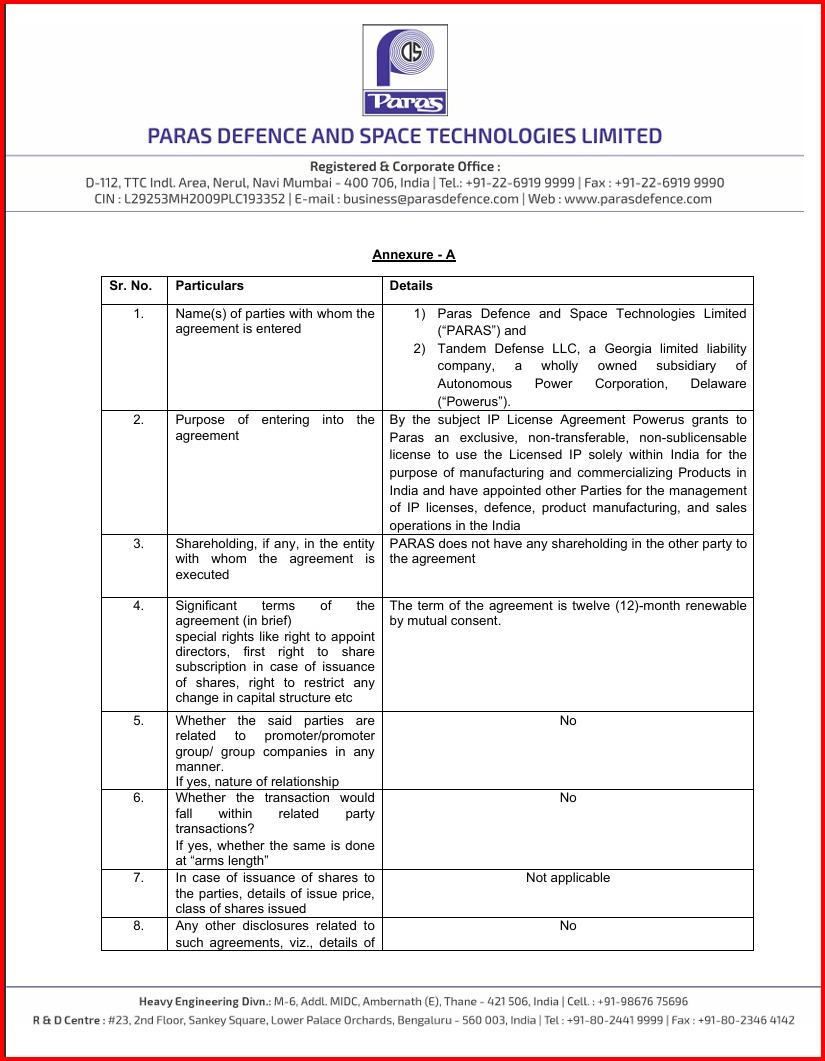
On June 30, nearly three months before a Powerus delegation was received at Pakistan's General Headquarters, an Indian defence company made a disclosure to the Bombay Stock Exchange and National Stock Exchange that deserves far more attention in Islamabad than it has so far received.
Paras Defence and Space Technologies said it had signed an intellectual-property licence agreement with Tandem Defense LLC, a Georgia company it identified as a wholly owned subsidiary of Autonomous Power Corporation, the Delaware company doing business as Powerus. The subject was the Guardian interceptor technology. Under the agreement, Powerus granted Paras an exclusive, non-transferable and non-sublicensable licence to use the intellectual property in India for manufacturing and commercialising products there. The filing described Guardian-1 as a high-speed, battery-powered counter-drone system designed to combat low-cost aerial threats.
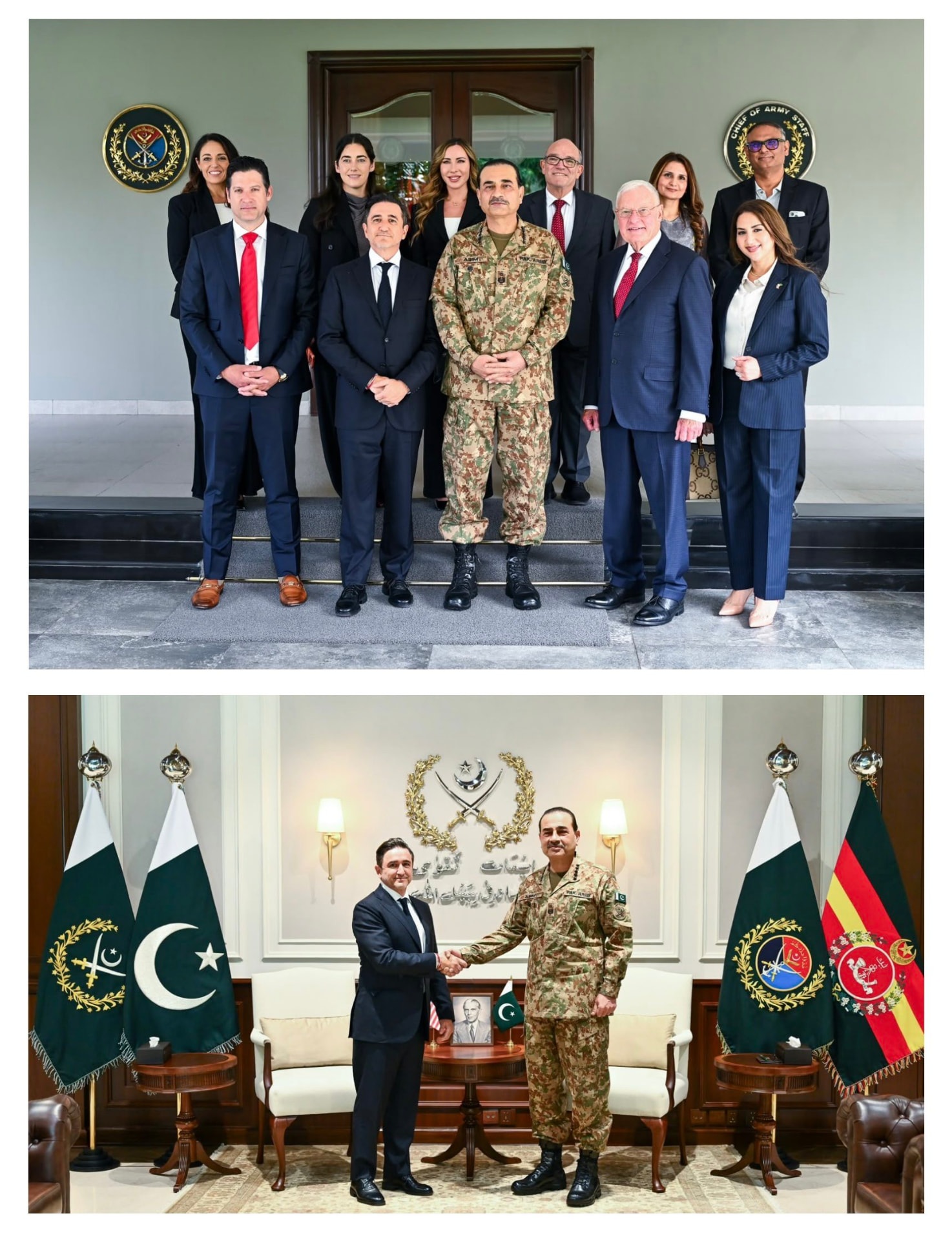
The chronology matters. The India agreement was not a reaction to the Pakistan deal. It came first. The Paras disclosure was dated June 30. Powerus's meeting with Field Marshal Syed Asim Munir at GHQ took place on September 16, and the US company then announced a limited procurement order from Pakistan's Ministry of Defence for unmanned aerial systems and associated support, alongside a separate strategic memorandum covering possible wider co-operation.
The sequence
| DATE | EVENT | WHY IT MATTERS |
|---|---|---|
| 30 Jun 2026 | Paras–Tandem/Powerus IP licence | Exclusive India rights to manufacture and commercialise Guardian interceptor products; 12-month term, renewable by mutual consent. |
| 16 Sep 2026 | Powerus delegation at GHQ | Pakistan military says talks covered procurement, production and capacity building. |
| 17–18 Sep 2026 | Pakistan order disclosed | Powerus announces a limited Pakistan MoD UAS order and a non-binding framework for wider autonomous-systems co-operation; value and detailed systems remain undisclosed. |
What the Indian filing actually proves
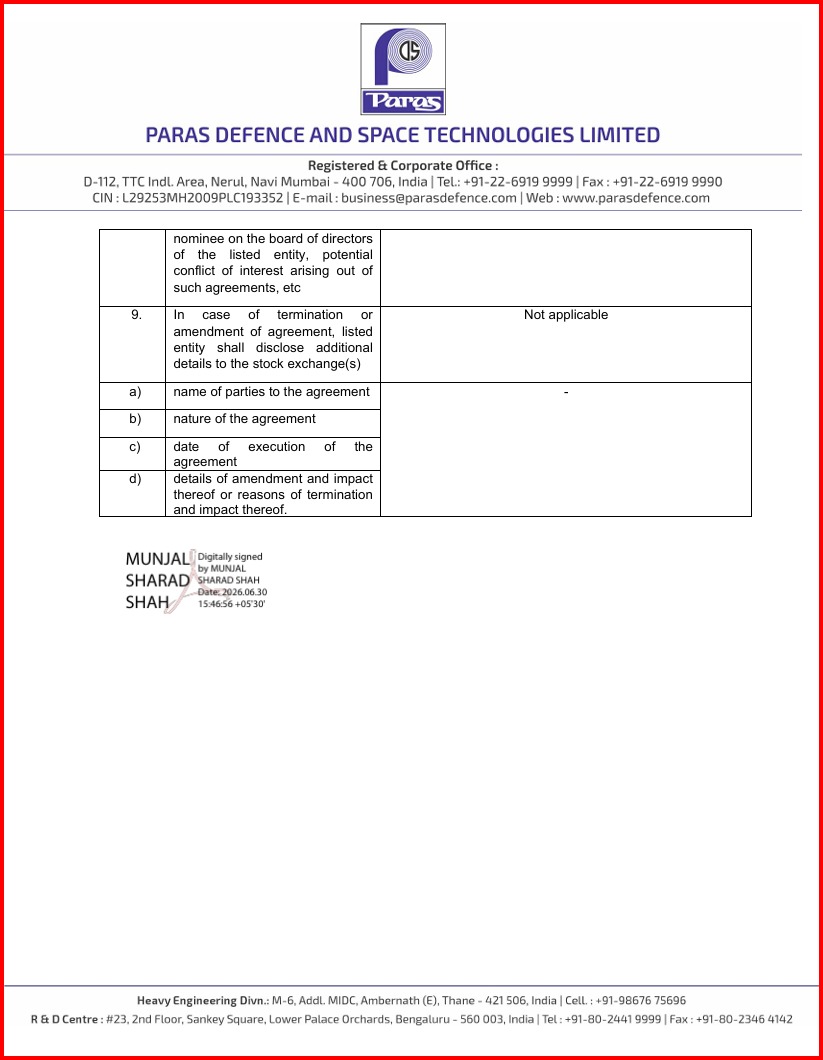
The Paras document is unusually useful because it is a regulatory disclosure rather than a political statement. It identifies the contracting parties, the technology, the territorial scope and the duration. It says the licence is exclusive within India and exists for the manufacture and commercialisation of products. It also says the initial term is 12 months and may be renewed by mutual consent.
Powerus's own US securities disclosures add a commercial detail: the India arrangement provides for a licence fee and a share of net profits from sales in India. That makes the relationship more than a technology demonstration. It establishes a mechanism under which Powerus can participate economically in the commercialisation of its interceptor products in the Indian market.
There is, however, an equally important limitation. The documents reviewed for this article do not show that the Indian armed forces have bought Guardian-1, nor do they establish that the system has been inducted into Indian service. What they establish is an India-exclusive manufacturing and commercialisation licence. That distinction should not be blurred.
“The India agreement was already on the public record before Pakistan opened its new Powerus relationship.”
Then came Pakistan
Powerus's Pakistan announcement is narrower than some of the political excitement surrounding it. The company says it received a limited procurement order for unmanned aerial systems and associated support. It separately signed a strategic memorandum with senior Pakistani defence officials to explore expanded co-operation in unmanned and autonomous defence technologies. Powerus explicitly states that the memorandum is not a definitive agreement, creates no purchase obligation and that future programmes would require definitive contracts and US government approvals.
Reuters reported that Powerus co-founder Brett Velicovich declined to identify the systems or disclose the value of the initial order, citing security sensitivities and confidentiality. Pakistan's military said the September 16 meeting at GHQ covered defence procurement, production and long-term capacity building. The public military statement did not itself disclose the memorandum or the initial order.
My own source reporting points to discussions around a prospective programme that could ultimately approach $2bn. I have not seen a public contract establishing that figure, and Powerus has not disclosed such a value. It should therefore be treated as source reporting about the potential scale of future co-operation, not as the value of the limited order already announced.
The due-diligence question for Islamabad
There is nothing inherently improper about an American defence company doing business on both sides of the India-Pakistan divide. Global defence groups routinely sell different products into rival markets, subject to export controls and national policy. Nor does an Indian counter-drone manufacturing licence mean that Guardian-1 is specifically designed to defeat whatever unmanned systems Pakistan may acquire from Powerus.
But Pakistan's security establishment cannot plausibly treat the India relationship as unknowable. Paras disclosed it to India's two principal stock exchanges on June 30. The agreement was therefore in the public domain before the GHQ engagement in September. For a procurement involving sensitive autonomous technology, this raises a legitimate due-diligence question: what assessment did Pakistan conduct of Powerus's existing regional partnerships before moving ahead?
If the relationship was known — as one would expect from any serious defence procurement process — the more important question is what Islamabad concluded. What technology transfer is Pakistan receiving? What local manufacturing rights, source-code access, integration rights or sovereign maintenance capability have been negotiated? What safeguards apply to data, software updates and supply chains? And how does Pakistan evaluate the strategic value of buying from a company whose interceptor technology is simultaneously being commercialised through an exclusive licence in India?
The Trump-family optics
The deal carries an additional layer of political sensitivity because Powerus is preparing to merge with Aureus Greenway Holdings. Reuters, citing US regulatory filings, reported that Donald Trump Jr and Eric Trump have an interest in Aureus through the investment fund American Ventures, which is expected to hold a 9.9 per cent beneficial ownership stake in the combined company after the merger.
That connection is politically significant, but it is not evidence that the Trump family secured the Pakistan contract. Powerus executives have rejected suggestions that the sons' investment influenced the company's contracts. A spokesperson for Donald Trump Jr told Reuters that he was a passive investor with no role in Powerus management and no involvement in the negotiation, procurement or execution of the Pakistan deal. The White House said there was no conflict of interest.
The distinction matters. The documented issue is a financial connection to the proposed merger partner. A quid pro quo between Pakistan's military leadership and the Trump family is not established by the available evidence. Any allegation of bribery would require evidence beyond corporate ownership links, political access and the timing of commercial agreements.
A wider strategic pivot
The Powerus agreement also fits a larger Pakistani effort to diversify defence relationships beyond its heavy reliance on China. That can be rational policy. Supplier diversification can reduce vulnerability, introduce competing technologies and improve bargaining power. But diversification is only strategically useful when the buyer retains leverage over technology, sustainment and future upgrades.
This is why the India document matters beyond the headline. Pakistan is not merely buying a product from a neutral shelf. It is entering a relationship with a fast-growing US autonomous-systems company that has already structured a distinct commercial pathway into India's counter-UAS market. Islamabad should be able to explain how that reality was incorporated into its procurement assessment.
The answer may ultimately be that the two relationships are technically and commercially compatible: India gets a licence to manufacture and market an interceptor, while Pakistan acquires a different set of unmanned systems and seeks local production or technology co-operation. If so, the Pakistani public deserves enough disclosure to understand the strategic logic without compromising operational secrets.
What remains unanswered
| 01 | What is the financial value of Pakistan’s limited order, and what systems are covered? |
|---|---|
| 02 | What is the realistic ceiling of the wider programme contemplated by the memorandum? |
| 03 | What technology-transfer, local-production and sovereign-support rights will Pakistan receive? |
| 04 | What assessment was made of Powerus’s pre-existing India licence before the Pakistan engagement? |
| 05 | What export-control or end-use restrictions could shape Pakistan’s ability to modify, integrate or deploy the systems? |
The real test is what Pakistan secured
The strongest criticism of the Powerus arrangement is not that the company is American, nor simply that it has an Indian partner. It is that Pakistan appears to have entered a strategically sensitive relationship after the India licence was already publicly documented, while the Pakistani side has disclosed little about price, technology, industrial rights or safeguards.
The most consequential question is therefore not whether Powerus can profit in both India and Pakistan. It plainly can, subject to law and export controls. The question is whether Pakistan negotiated from a position of knowledge and strength — or whether political enthusiasm for a renewed Washington relationship outran the hard disciplines of defence procurement.
For Field Marshal Asim Munir, who has made improved ties with the United States a conspicuous part of Pakistan's recent diplomacy, the answer matters. A photograph at GHQ is not a technology strategy. Nor is access in Washington a substitute for transparent assessment of national interest. The measure of this deal will be the capability Pakistan acquires, the industrial knowledge it retains and the freedom of action it preserves after the headlines have faded.
The June 30 Paras filing gives Pakistanis a simple benchmark against which to judge that outcome: India secured a documented exclusive commercial and manufacturing pathway for Powerus counter-drone intellectual property before Pakistan's new relationship was announced. Islamabad should now explain, with comparable clarity, what Pakistan secured in return.
Documents and reporting reviewed
• Paras Defence and Space Technologies Ltd, BSE/NSE Regulation 30 filing, 30 June 2026. User-acquired regulatory filing reviewed by the author.
• Powerus / Aureus Greenway Holdings, Pakistan Ministry of Defence order and strategic memorandum announcement, 17–18 September 2026. Source
• Reuters, “US drone maker Powerus signs Pakistan Army MOU, gets initial order”, 16–17 September 2026. Source
• US securities disclosure on Powerus business and Paras licensing arrangement, August 2026. Source
Author’s note: The approximately $2bn figure is source reporting concerning the possible scale of a prospective wider programme. It is not the disclosed value of the limited procurement order. The article distinguishes documented corporate and regulatory facts from source reporting and analysis.
Reader comments
Subscribers can join the conversationSign in to join the conversation. Comments are open to everyone with a free account.
Sign in or create accountLoading comments…